
Antiparos: Greece’s Hidden Cycladic Island Paradise
Nestled in the heart of the Cyclades archipelago, Antiparos offers travelers an authentic Greek island experience that remains largely untouched by mass tourism. This small island, separated from its larger neighbor Paros by a narrow strait, has become a sought-after destination for those seeking genuine cultural immersion, pristine natural beauty, and the relaxed pace of traditional island life. With its charming main village, extraordinary cave systems, and crystalline beaches, Antiparos presents a compelling alternative to the more crowded Cycladic destinations while maintaining easy accessibility and modern amenities.
Understanding Antiparos Geography and Accessibility
Antiparos measures approximately 13 kilometers in length and spans just 45 square kilometers, making it an intimate destination perfect for thorough exploration during a week-long stay. The island sits less than two kilometers from Paros, connected by frequent ferry services that make day trips between the islands effortless.
The main settlement, also called Antiparos, hugs the northeastern coast and serves as the island's commercial and cultural hub. Most visitors arrive through Paros, either flying into Paros National Airport or taking ferries from Athens' ports of Piraeus and Rafina. The short ferry crossing from Paros to Antiparos takes approximately ten minutes, creating a dramatic transition from the busier island to its more tranquil neighbor.
Transportation Options
Getting around Antiparos requires strategic planning, as the island's compact size makes multiple transportation methods viable:
- Rental vehicles: Cars, ATVs, and scooters available in the main town
- Local buses: Limited service connecting major beaches and villages
- Water taxis: Seasonal service to remote beaches and coves
- Bicycles: Ideal for the relatively flat terrain and short distances
- Walking: The main village is entirely pedestrian-friendly
The island's road network remains straightforward, with one primary route running north to south, making navigation simple even for first-time visitors.

Historical Significance and Cultural Heritage
The history and culture of Antiparos stretches back millennia, with archaeological evidence revealing continuous habitation since the Neolithic period. The island's strategic position in the Cyclades made it valuable to successive civilizations, from ancient Greeks to Venetians to Ottomans.
Ancient settlers recognized Antiparos as "Oliaros," and the island played a minor but consistent role in Cycladic trade networks. During the Venetian period, the Loredano family constructed the iconic kastro (castle) in the 15th century, creating a fortified settlement that still forms the architectural heart of the main village today.
| Historical Period | Key Developments | Visible Remains |
|---|---|---|
| Neolithic Era | Initial settlements | Archaeological sites |
| Classical Greek | Trade participation | Pottery fragments |
| Venetian Rule | Kastro construction | Castle walls and gates |
| Ottoman Period | Administrative changes | Some architectural elements |
| Modern Era | Tourism development | Traditional village preservation |
The Venetian Kastro
The kastro represents the most significant historical monument on Antiparos. Unlike typical fortresses, this kastro comprises interconnected houses built in a defensive circular pattern, with their outer walls forming the castle perimeter. Visitors can walk through narrow passages, discover hidden courtyards, and observe how medieval islanders created security through architectural ingenuity rather than massive fortifications.
The historical development of Antiparos reveals how the island maintained cultural continuity despite changing rulers, with each civilization leaving subtle marks on local architecture, cuisine, and traditions.
Natural Attractions and Outdoor Activities
Antiparos distinguishes itself through remarkable natural features that appeal to adventure seekers and nature enthusiasts. The island combines geological wonders with coastal beauty, creating diverse opportunities for outdoor exploration.
The Cave of Antiparos
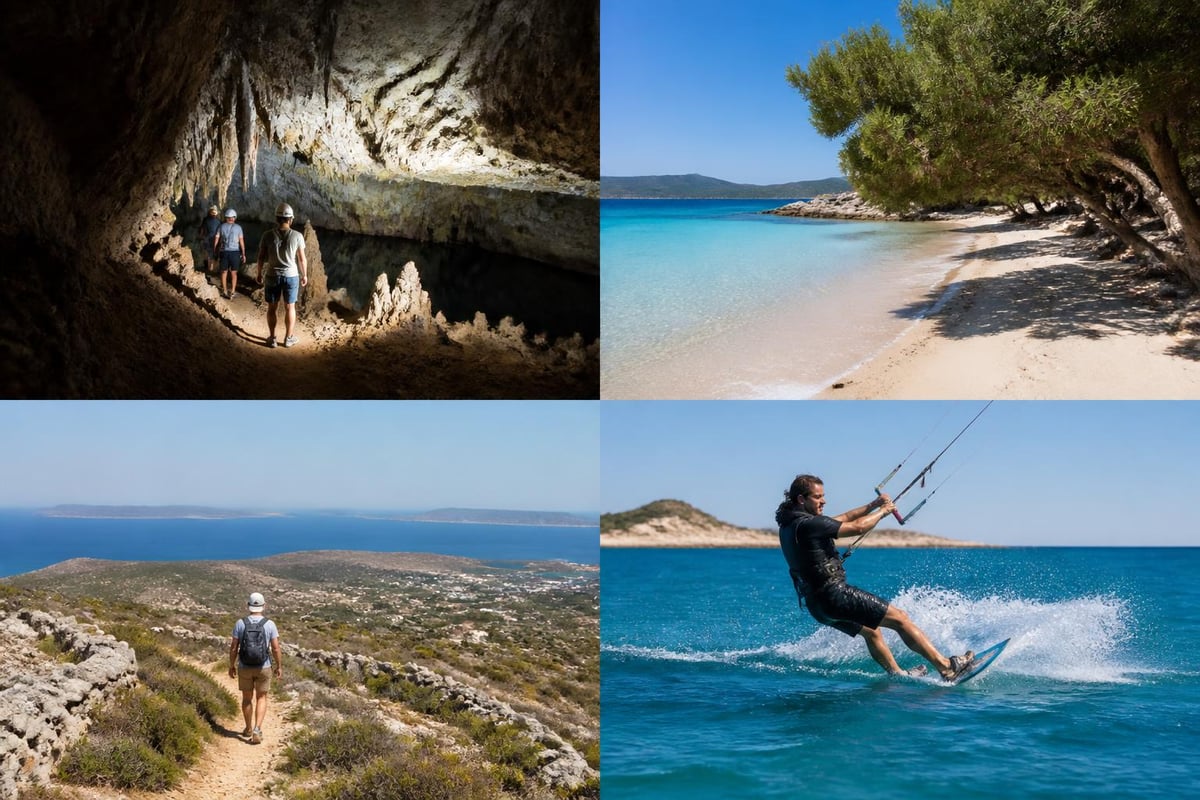
The Cave of Antiparos ranks among the Mediterranean's most impressive cave systems. Located on the southeastern slopes near the village of Agios Ioannis, this cavern descends approximately 90 meters underground and features extraordinary stalactite and stalagmite formations dating back millions of years.
Historical records document visits to the cave since antiquity, with Wikipedia noting that various European nobility and intellectuals inscribed their names on the cave walls during Grand Tour expeditions in the 17th and 18th centuries. The main chamber, accessible via concrete steps, showcases nature's sculptural artistry in limestone formations that resemble flowing curtains, organ pipes, and frozen waterfalls.
Cave visiting essentials:
- Temperature remains constant at approximately 17°C (63°F)
- Sturdy footwear recommended for descending stairs
- Photography permitted without flash
- Seasonal operating hours vary
- Small entrance fee supports conservation
Beach Paradise
Antiparos boasts over a dozen beaches, each offering distinct characteristics for different preferences. The western coast generally provides more wind protection and calmer waters, while eastern beaches attract windsurfers and kitesurfers with reliable afternoon breezes.
Top beaches by category:
- Psaraliki: Closest to the main town, ideal for families with young children
- Glyfa: Wide sandy beach with organized facilities and water sports
- Soros: Long stretch of golden sand with beach clubs and restaurants
- Faneromeni: Quieter option on the southern coast with camping facilities
- Agios Georgios: Remote northern beach accessible by boat or rough road
The clarity of Antiparos waters makes the island exceptional for snorkeling and diving, with visibility often exceeding 30 meters in calm conditions.
Village Life and Local Cuisine
The main village of Antiparos embodies authentic Cycladic charm without the overwhelming commercialization affecting many Greek islands. Whitewashed buildings cascade toward the waterfront, narrow lanes wind through residential neighborhoods, and the central square serves as the community's social heart.
Architectural Character
Traditional Cycladic architecture dominates the streetscape, characterized by cubic structures, flat roofs, blue-trimmed windows, and flowered balconies. The village maintains strict building codes preserving this aesthetic, ensuring new construction blends harmoniously with historical structures.
Walking through residential areas reveals how locals maintain traditional lifestyles alongside modern conveniences. Elderly residents still gather in traditional kafeneia (coffee houses), fishermen repair nets along the waterfront, and small family-run businesses operate according to seasonal rhythms rather than tourist demands.
Culinary Experiences
Antiparos cuisine reflects broader Cycladic traditions while incorporating local specialties shaped by the island's fishing heritage and agricultural production. Several family-owned tavernas have served generations of islanders and visitors, maintaining recipes passed down through decades.
| Dish Type | Local Specialties | Where to Find |
|---|---|---|
| Seafood | Grilled octopus, fresh catch | Waterfront tavernas |
| Cheese | Xinomyzithra, local goat cheese | Traditional grocers |
| Vegetables | Sun-dried tomatoes, capers | Local markets |
| Sweets | Honey pastries, loukoumades | Village bakeries |
| Wine | Cycladic varieties | Wine bars and restaurants |
The island produces limited quantities of wine, olive oil, and honey, with some properties offering tastings by appointment. This farm-to-table approach ensures exceptional freshness and supports the local agricultural economy.
Accommodation Options Across Budgets
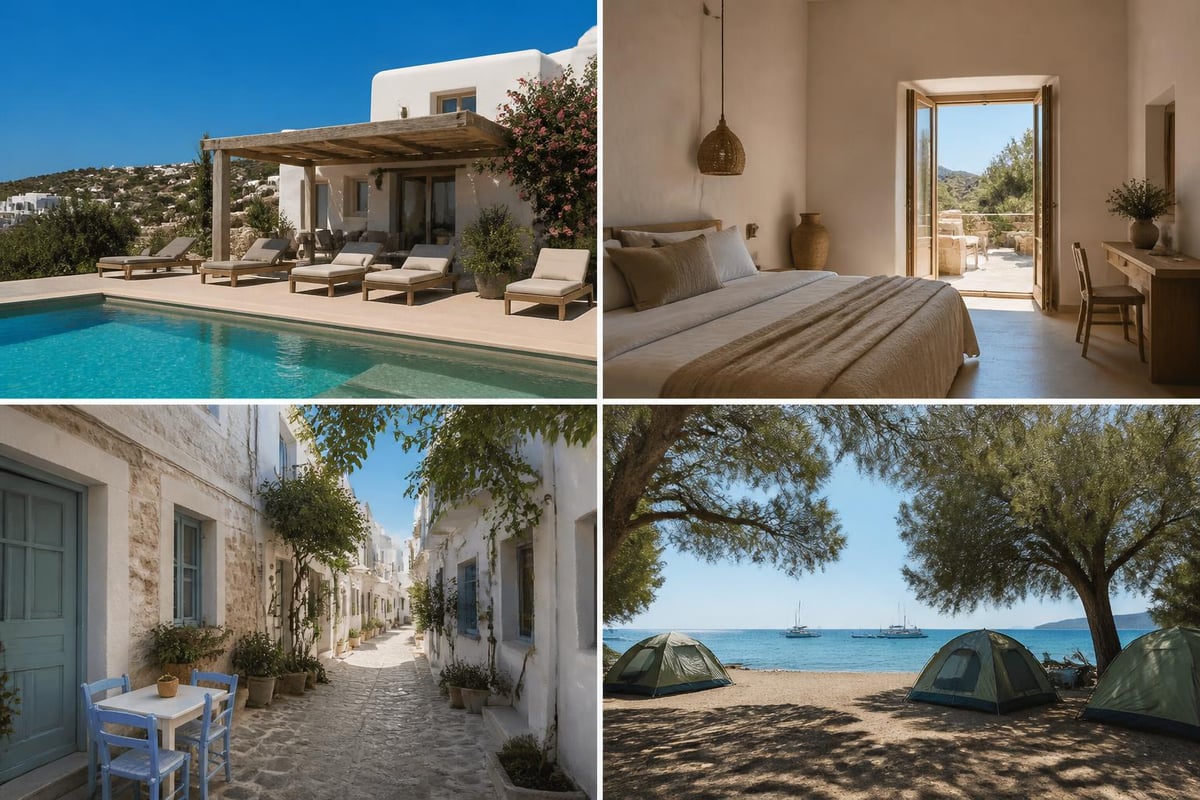
Antiparos provides accommodation diversity suitable for various preferences and budgets, from luxury villas to traditional guesthouses. The island's development has remained controlled, preventing large resort complexes while allowing quality small-scale properties.
Accommodation categories:
- Luxury villas: Private pools, sea views, full amenities for families or groups
- Boutique hotels: Design-focused properties blending traditional and contemporary aesthetics
- Traditional guesthouses: Family-run establishments in village center locations
- Apartments: Self-catering options providing flexibility and value
- Camping: Organized facilities near popular beaches for budget travelers
Booking well in advance becomes essential for July and August visits, as the island's limited accommodation capacity fills quickly during peak season. Shoulder seasons (May-June and September-October) offer the ideal balance of pleasant weather, available accommodations, and fewer crowds.
Seasonal Considerations for Visiting Antiparos
Understanding seasonal patterns helps travelers optimize their Antiparos experience according to personal priorities. The island transforms dramatically across the calendar year, with each season offering distinct advantages and limitations.
Peak Summer Season (July-August)
Summer brings vibrant energy to Antiparos, with all facilities operating at full capacity. Beaches become social hubs, restaurants buzz with activity, and cultural events enliven evening hours. However, this period also brings challenges: accommodation scarcity, higher prices, crowded ferries, and afternoon heat exceeding 30°C (86°F).
Shoulder Seasons (May-June, September-October)
Many experienced travelers consider shoulder seasons ideal for Antiparos visits. Temperatures remain comfortable for beach activities and exploration, most establishments operate normally, and the island retains authentic character without overwhelming tourist presence. Sea temperatures in September and early October often prove warmer than June, making autumn particularly appealing for swimming enthusiasts.
Off-Season (November-April)
Winter reveals Antiparos in its most authentic state, when tourism virtually disappears and island life returns to traditional patterns. While most tourist-oriented businesses close, year-round tavernas and cafes continue serving locals. This period suits travelers seeking absolute tranquility, cultural immersion, and budget rates, though swimming becomes uncomfortable and some attractions operate reduced hours or close entirely.
Day Trips and Island Hopping Opportunities
Antiparos serves as an excellent base for exploring the broader Cyclades region. The island's central position and ferry connections enable diverse day trip possibilities without requiring accommodation changes.
Accessible destinations:
- Paros: Fifteen-minute ferry for shopping, historical sites, and dining variety
- Naxos: Forty-minute ferry to the Cyclades' largest island with mountain villages
- Santorini: Two-hour ferry to the famous caldera and sunset views
- Ios: Seasonal connections to beaches and nightlife
- Mykonos: Via Paros connection for cosmopolitan atmosphere
Many travelers combine Antiparos with other Cycladic islands in multi-destination itineraries. The contrast between Antiparos' authenticity and Santorini's dramatic landscapes or Mykonos' sophistication creates compelling vacation narratives that showcase different aspects of Greek island culture.
Sustainable Tourism and Community Impact
Antiparos faces the common challenge of balancing tourism revenue with quality-of-life preservation for permanent residents. The island's small size makes it particularly vulnerable to overtourism impacts, including water scarcity, waste management strain, and housing affordability issues as properties convert to vacation rentals.
Responsible Travel Practices
Visitors can support sustainable tourism on Antiparos through conscious choices:
- Support local businesses: Choose family-owned tavernas and shops over chain establishments
- Respect water resources: Take brief showers and report leaks immediately
- Reduce plastic waste: Carry reusable water bottles and shopping bags
- Stay on marked paths: Protect fragile ecosystems during hikes
- Observe quiet hours: Respect residential areas, especially during afternoon rest periods
- Learn basic Greek phrases: Show cultural respect through language effort
The island lacks large-scale waste processing facilities, making recycling participation and waste reduction particularly important. Many accommodations provide sorting bins, and the main village has dedicated recycling collection points.
Planning Your Antiparos Itinerary
A well-structured itinerary maximizes the Antiparos experience while maintaining the relaxed pace that defines island culture. Most visitors find five to seven days ideal for thorough exploration without feeling rushed.
Sample Five-Day Itinerary
Day 1: Arrival, village exploration, sunset at Psaraliki Beach
Day 2: Cave visit, Agios Georgios beach, traditional taverna dinner
Day 3: Boat tour around the island, swimming at remote coves, seafood lunch
Day 4: Paros day trip for historical sites and shopping
Day 5: Southern beach exploration, farewell dinner in the kastro
This framework allows flexibility for weather-dependent activities, spontaneous discoveries, and essential downtime. The comprehensive travel resources available help visitors customize itineraries based on specific interests, whether focusing on archaeology, gastronomy, water sports, or pure relaxation.
Cultural Events and Local Festivals
Traditional festivals punctuate the Antiparos calendar, offering visitors authentic glimpses into local culture and religious traditions. These celebrations typically center on patron saints' feast days, combining religious observances with community gatherings featuring music, dancing, and feasting.
The August 15th Assumption of Mary celebration represents the most significant annual event, with processions, special church services, and village-wide festivities. Summer months also bring occasional concerts, art exhibitions, and cultural performances, particularly in the main square.
Participating in these events requires respectful observation of local customs, including appropriate dress for church visits and understanding that these remain genuine community celebrations rather than staged tourist attractions.
Photography and Social Media Opportunities
Antiparos provides endless photographic inspiration, from iconic white architecture against azure skies to dramatic cave interiors and sunset seascapes. The island's photogenic qualities have increasingly attracted Instagram influencers and photography enthusiasts.
Prime photography locations:
- Kastro alleyways during golden hour
- Cave stalactite formations with proper lighting
- Waterfront tavernas with boats in the foreground
- Sunset views from western coast beaches
- Traditional doorways with flowering bougainvillea
Respecting residents' privacy remains crucial when photographing village scenes. Many locals prefer not appearing in tourist photographs, and entering private properties without permission crosses cultural boundaries regardless of photographic potential.
Antiparos stands as a testament to authentic Greek island living, offering discerning travelers an alternative to over-touristed destinations without sacrificing beauty, culture, or accessibility. The island's combination of pristine beaches, historical significance, and genuine community atmosphere creates memorable experiences that extend beyond typical vacation snapshots. Whether you're drawn to archaeological wonders, culinary traditions, or simply the relaxed rhythm of Cycladic life, Antiparos delivers on multiple levels. Hellenic Holidays specializes in crafting personalized Greek itineraries that incorporate hidden gems like Antiparos alongside classic destinations, ensuring your journey captures both the iconic and authentic aspects of Greece. Let our expertise in tailor-made vacation packages transform your Greek island dreams into carefully planned reality.