
Best Greece City to Visit: Complete 2026 Travel Guide
Greece offers travelers an extraordinary blend of ancient history, stunning architecture, vibrant culture, and Mediterranean beauty. Choosing the right greece city to visit can transform your vacation from ordinary to unforgettable. Whether you're drawn to archaeological wonders, island paradises, or cosmopolitan urban centers, each Greek city presents its own unique character and experiences. This comprehensive guide explores the most captivating destinations across mainland Greece and its islands, helping you craft the perfect tailor-made itinerary for 2026.
Athens: The Gateway to Ancient Greece
Athens stands as the quintessential greece city to visit for history enthusiasts and culture seekers. The capital combines 3,400 years of history with contemporary Greek life, creating an energetic atmosphere unlike anywhere else in the country.
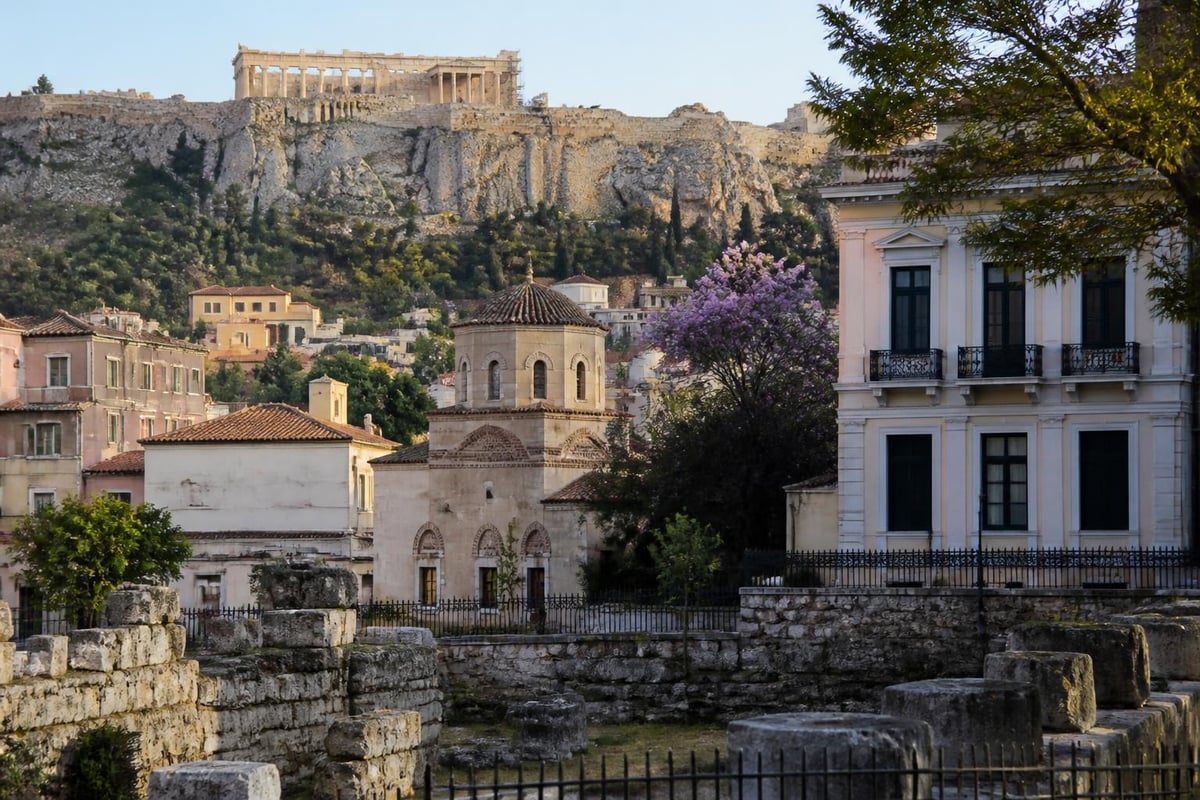
The Acropolis dominates the city skyline, with the Parthenon serving as an enduring symbol of classical civilization. Beyond this iconic landmark, Athens rewards exploration with numerous archaeological sites, including the Ancient Agora, Temple of Olympian Zeus, and the Theater of Dionysus. The Acropolis Museum showcases treasures from ancient Greece with striking modern architecture.
Modern Athens Beyond the Ruins
Plaka's pedestrian streets wind through neoclassical architecture, traditional tavernas, and boutique shops. The neighborhood provides an ideal introduction to Greek cuisine and hospitality. Monastiraki's flea market offers vintage finds and handcrafted souvenirs, while the adjacent square buzzes with street performers and outdoor cafes.
Key Athens neighborhoods to explore:
- Psyrri for contemporary art galleries and nightlife
- Kolonaki for upscale shopping and sophisticated dining
- Exarcheia for alternative culture and student energy
- Syntagma for government buildings and the changing of the guard
The National Archaeological Museum houses the world's finest collection of Greek antiquities. Lycabettus Hill provides panoramic city views, especially spectacular at sunset. Athens serves as an excellent starting point before exploring Greece’s diverse urban landscapes.
Thessaloniki: Greece's Cultural Capital
Thessaloniki represents an often-overlooked greece city to visit that rivals Athens in historical significance while maintaining a more relaxed Mediterranean atmosphere. Greece's second-largest city blends Roman, Byzantine, and Ottoman influences across its architecture and culture.
The White Tower anchors the waterfront promenade, where locals gather for evening strolls. Byzantine churches throughout the city showcase remarkable mosaics and frescoes, with fifteen sites collectively recognized as UNESCO World Heritage locations. The Rotunda and Arch of Galerius provide glimpses into Roman Thessaloniki.
Culinary Excellence and Vibrant Atmosphere
Thessaloniki's food scene surpasses many larger European cities. The Modiano and Kapani markets overflow with fresh produce, spices, and local specialties. Traditional tavernas serve bougatsa pastries for breakfast and innovative mezze combinations for dinner.
| District | Character | Best For |
|---|---|---|
| Ladadika | Renovated warehouse quarter | Nightlife and dining |
| Ano Poli | Upper Town historic quarter | Traditional architecture and views |
| Waterfront | Modern promenade | Evening walks and cafes |
| Aristotelous Square | Central plaza | People-watching and events |
The city maintains strong connections to its Jewish, Ottoman, and Balkan heritage. Museums dedicated to cinema, photography, and Byzantine culture provide rainy-day alternatives. Thessaloniki's compact layout makes walking the primary mode of exploration.
Santorini: The Iconic Island City
Santorini's clifftop settlements of Fira and Oia create one of the most photographed greece city to visit destinations worldwide. The volcanic caldera provides a dramatic backdrop to whitewashed buildings with blue-domed churches.
Oia attracts thousands to witness legendary sunsets, though the spectacle can be enjoyed from numerous vantage points across the island. Fira offers similar views with more dining and shopping options. The cable car connects the old port to the main town, providing spectacular perspectives during the ascent.
Beyond the Postcard Views
Santorini's volcanic origins created unique wine-growing conditions. Assyrtiko grapes thrive in the island's volcanic soil, producing distinctive crisp white wines. Numerous wineries offer tastings with caldera views, combining oenology with scenery.
Essential Santorini experiences:
- Red Beach and Perissa's black sand beaches
- Ancient Akrotiri archaeological site
- Traditional villages of Pyrgos and Megalochori
- Wine tasting at Santo Wines or Venetsanos Winery
- Catamaran sailing around the caldera
The island's tourism infrastructure caters to honeymooners and luxury travelers, though budget options exist in Perissa and Kamari. Peak season (June through September) brings crowds and premium prices, while shoulder seasons offer pleasant weather with fewer visitors.
Crete's Urban Centers: Heraklion and Chania
Crete's cities provide distinct experiences across Greece's largest island. Heraklion serves as the capital and gateway to Minoan civilization, while Chania enchants visitors with Venetian harbor charm.
Heraklion: Archaeological Treasures
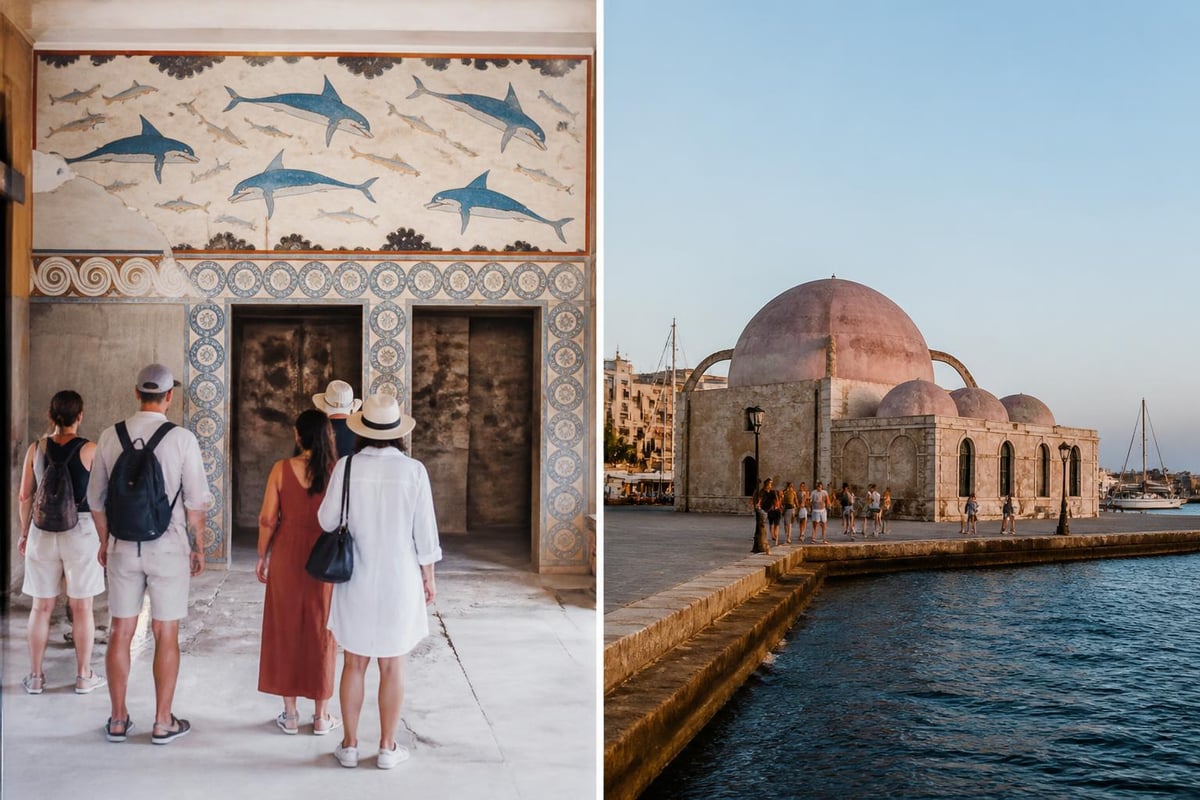
Heraklion makes an excellent greece city to visit for those fascinated by ancient civilizations. The Heraklion Archaeological Museum houses the world's most comprehensive Minoan art collection, including the famous Snake Goddess figurines and vibrant frescoes from Knossos.
The Palace of Knossos lies just five kilometers from the city center. This Bronze Age archaeological site sparks imagination with its labyrinthine layout, advanced plumbing systems, and colorful reconstructions. Whether the Minotaur legend holds truth or represents mythology, Knossos captivates visitors with sophisticated ancient engineering.
Modern Heraklion surrounds a Venetian fortress and harbor. The central market sells Cretan products including olive oil, honey, herbs, and raki. Morosini Fountain anchors the pedestrian zone filled with cafes and shops.
Chania: Venetian Elegance
Chania's Old Town radiates from its semicircular Venetian harbor, where restaurants line the waterfront beneath a landmark lighthouse. The Venetians ruled from 1252 to 1669, leaving architectural legacies throughout the narrow streets. Ottoman influences appear in the Mosque of the Janissaries and Turkish bathhouses.
The Archaeological Museum, Municipal Art Gallery, and Maritime Museum provide cultural depth. Leather goods manufactured in the traditional Chania style make popular souvenirs. The best cities to visit in Greece often include Chania for its authentic Cretan atmosphere combined with refined dining and accommodations.
Rhodes Town: Medieval Wonder
Rhodes Town stands as a remarkable greece city to visit where medieval walls contain a living community. The Palace of the Grand Master towers over the Street of the Knights, both impeccably preserved from the era when the Knights Hospitaller ruled the island.
The Old Town earned UNESCO World Heritage status for good reason. Meandering through its cobblestone alleys reveals Byzantine churches, Ottoman mosques, and Italianate architecture. The Jewish Quarter's Kahal Shalom Synagogue represents Greece's oldest synagogue, built in 1577.
Rhodes Town highlights:
- Walking the medieval walls for panoramic views
- Exploring the Archaeological Museum in the Hospital of the Knights
- Visiting Mandraki Harbor with its deer statues and windmills
- Shopping along Sokratous Street
- Relaxing on nearby Elli Beach
The New Town extends beyond the walls with modern amenities, beaches, and the Aquarium showcasing Mediterranean marine life. Rhodes combines historical significance with island resort conveniences, making it ideal for travelers seeking both culture and relaxation.
Nafplio: Romantic Elegance
Nafplio deserves recognition as a charming greece city to visit in the Peloponnese. This former capital of modern Greece maintains an elegant atmosphere with neoclassical mansions, bougainvillea-draped balconies, and waterfront promenades.
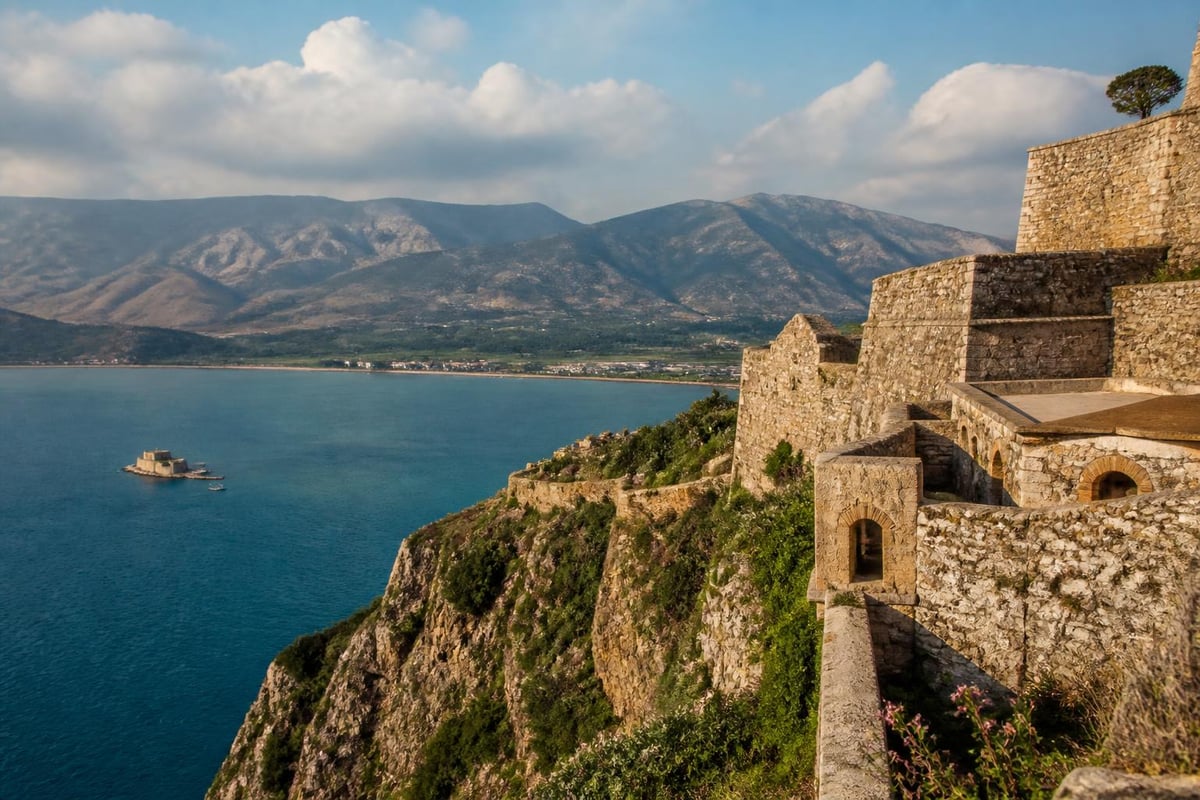
Three Venetian fortresses surround the city. Palamidi Fortress requires climbing 999 steps but rewards effort with spectacular views across the Argolic Gulf. Bourtzi Castle occupies a small island in the harbor, accessible by water taxi. Akronafplia, the oldest fortress, now houses a hotel within its walls.
Day Trip Hub for Ancient Sites
Nafplio's strategic location provides access to major archaeological sites. Mycenae lies 25 kilometers away, where the Lion Gate and Treasury of Atreus evoke the Bronze Age civilization described in Homer's epics. Ancient Epidaurus, 30 kilometers distant, features a remarkably preserved theater still hosting performances during summer festivals.
The city itself invites leisurely exploration. Syntagma Square's cafes serve traditional sweets and coffee beneath the shade of trees. Vasileos Konstantinou Street leads to boutiques selling local artwork and crafts. Sunset walks along the harbor promenade have made Nafplio popular with honeymooners and romantic getaways.
Corfu Town: Venetian and British Influences
Corfu Town offers a distinct greece city to visit experience influenced by centuries of Venetian and British rule rather than Ottoman occupation. This unique history created architecture and culture diverging from mainland Greece.
The Old Town's UNESCO-listed Venetian fortresses, French arcades, and British cricket grounds create unexpected combinations. Liston Arcade mimics Paris's Rue de Rivoli, with cafes serving traditional ginger beer alongside Greek coffee. The narrow streets called "kantounia" wind between pastel-colored buildings adorned with wrought-iron balconies.
| Attraction | Era | Significance |
|---|---|---|
| Old Fortress | Venetian (1546) | Defensive stronghold with panoramic views |
| Palace of St. Michael and St. George | British (1824) | Regency architecture housing museums |
| Spianada Square | French influence | Europe's largest square |
| Church of Saint Spyridon | Byzantine tradition | Island's patron saint relics |
The Archaeological Museum displays artifacts from the Temple of Artemis, including the striking Gorgon pediment. Mon Repos Palace sits amid botanical gardens where Prince Philip was born in 1921. Corfu's relaxed cosmopolitan atmosphere attracts visitors seeking Greece’s diverse urban experiences.
Mykonos Town: Cycladic Glamour
Mykonos Town (Chora) epitomizes the greece city to visit for those seeking vibrant nightlife alongside traditional Cycladic architecture. Whitewashed cubic buildings with colorful doors and window frames create an iconic aesthetic that defines Greek island imagery.
Little Venice's waterfront houses built at the edge of the sea provide sunset viewing and dining venues. The district's balconies literally hang over the waves, creating dramatic photo opportunities. Five iconic windmills stand in a row above the town, serving as Mykonos's most recognizable landmark.
Shopping and Beach Culture
Matoyianni Street and surrounding lanes contain high-end boutiques, jewelry shops, and art galleries. Designer brands mix with local creators offering handmade sandals, ceramics, and textiles. The shopping experience emphasizes quality over bargain hunting.
Paradise and Super Paradise beaches established Mykonos's reputation as a party destination, though the island offers quieter alternatives. Beach clubs combine Mediterranean sun with world-class DJs during summer months. The town's bars and clubs maintain energy until sunrise.
Despite commercialization, Mykonos Town preserves charm in quiet morning hours. Paraportiani Church represents a stunning architectural complex of five churches merged into asymmetrical whitewashed volumes. The Archaeological Museum and Folklore Museum provide cultural context beyond the beaches and boutiques.
Delphi: Ancient Oracle's Home
Delphi qualifies as an essential greece city to visit for understanding ancient Greek spirituality and culture. Once considered the center of the world in ancient times, this mountainside sanctuary attracted pilgrims seeking the Oracle's prophecies.
The archaeological site cascades down Mount Parnassus slopes with the Temple of Apollo as its centerpiece. The Sacred Way leads past treasuries built by various city-states to honor Apollo. The ancient theater and stadium demonstrate how religious festivals combined athletics and performing arts.
Key Delphi experiences:
- Temple of Apollo where the Oracle delivered prophecies
- Tholos of Delphi, the circular temple with striking columns
- Delphi Archaeological Museum housing the Charioteer statue
- Castalian Spring where pilgrims purified themselves
- Views across olive groves to the Gulf of Corinth
The modern village of Delphi provides accommodations and dining with spectacular mountain and valley views. Spring visits coincide with wildflowers blooming across the slopes. Winter brings occasional snow, creating ethereal atmospheres among the ruins. The site's elevation and northern location mean cooler temperatures than coastal destinations.
Patras: Gateway to Western Greece
Patras serves as Greece's third-largest city and a significant greece city to visit for its carnival celebrations and strategic port location. The city connects mainland Greece to Italy via ferry and the Peloponnese to western Greece across the Rio-Antirrio Bridge.
The Patras Carnival ranks among Europe's largest, with three weeks of parades, balls, and festivities culminating on Clean Monday. Elaborate floats, satirical performances, and treasure hunts transform the city each February and March. The carnival museum operates year-round, documenting this important cultural tradition.
Cultural and Religious Significance
The Church of Saint Andrew houses relics of the apostle who was martyred in Patras. The Byzantine-style cathedral completed in 1974 accommodates 5,000 worshippers beneath its impressive dome. The church attracts Orthodox Christian pilgrims from across Greece and Eastern Europe.
The Roman Odeon hosts summer performances in its restored ancient theater. Patras Castle provides elevated views across the city and Gulf of Patras. The Archaeological Museum displays finds from the broader Achaea region spanning prehistoric to Roman periods.
Psila Alonia Square serves as the city's central meeting point with cafes and restaurants. The waterfront promenade extends for several kilometers, popular for evening walks. While Patras may lack the tourist infrastructure of islands, it offers authentic modern Greek urban life.
Kavala: Northern Aegean Charm
Kavala represents an underrated greece city to visit in Eastern Macedonia and Thrace. This amphitheater-shaped city rises from its harbor with pastel-colored buildings cascading up the hillside toward a Byzantine fortress.
The Imaret stands as Kavala's most distinctive landmark, a former Islamic theological school built in 1817 now converted to a luxury hotel. The domed architecture and courtyard demonstrate Ottoman building traditions. The aqueduct Kamares spans the old and new quarters, built during Suleiman the Magnificent's reign.
Tobacco Wealth Heritage
Kavala prospered from tobacco trade in the late 19th and early 20th centuries, leaving a legacy of neoclassical mansions and cultural institutions. The Tobacco Museum documents this economic history through exhibits on cultivation, processing, and social impacts. The Municipal Museum occupies a restored tobacco merchant's mansion.
Panagia district preserves narrow cobblestone streets and traditional architecture. Fish tavernas line the harbor serving fresh catches with ouzo. The city beach Rapsani provides convenient swimming without leaving town. Kavala serves as a base for exploring nearby Philippi archaeological site, where Saint Paul established Europe's first Christian community.
Planning Your Greece City Visit
Selecting which greece city to visit depends on your interests, travel style, and available time. First-time visitors often combine Athens with one or two islands, creating a balanced introduction to Greek diversity. History enthusiasts might focus on mainland archaeological sites, while beach lovers prioritize island destinations.
Seasonal Considerations
Best times to visit different city types:
- Island cities (Santorini, Mykonos): May-June or September-October for pleasant weather without peak crowds
- Mainland cities (Athens, Thessaloniki): Spring (April-May) or fall (September-November) offer comfortable temperatures
- Northern cities (Kavala): Summer months provide warmest weather for Aegean swimming
- Mountain sites (Delphi): Spring wildflowers or fall colors enhance the experience
Transportation between cities varies by location. Domestic flights connect major destinations quickly, though island-hopping ferries create more scenic journeys. Rental cars provide flexibility for exploring the Peloponnese and Crete. Athens serves as the primary international gateway, making it logical to begin or end itineraries there.
Budget allocation should account for significant price variations. Island destinations command premium rates during high season, while mainland cities maintain more consistent pricing year-round. Accommodation ranges from budget hostels to luxury resorts, with each greece city to visit offering options across price points.
Regional Combinations That Work
Crafting multi-city itineraries requires geographical consideration. The top cities to visit in Greece can be combined strategically to minimize backtracking while maximizing diversity.
Popular itinerary frameworks:
- Classical Greece: Athens, Delphi, Nafplio, with day trips to Mycenae and Epidaurus
- Island Hopping: Athens, Mykonos, Santorini via ferry connections
- Crete Explorer: Heraklion, Chania, with beach and mountain village visits
- Northern Journey: Thessaloniki, Kavala, with excursions to Meteora monasteries
- Peloponnese Circuit: Nafplio, Olympia, Monemvasia, Mystras
Each combination offers distinct experiences. Classical Greece emphasizes archaeology and ancient history. Island hopping prioritizes beaches and Cycladic culture. The Crete explorer delves into Minoan civilization and mountain villages. Northern journeys reveal less-touristed regions with Byzantine heritage. Peloponnese circuits combine history with dramatic landscapes.
Transportation logistics influence feasible combinations. Ferries between Cycladic islands operate frequently in summer but reduce services off-season. Driving the Peloponnese provides flexibility but requires comfort with Greek road conditions. Domestic flights efficiently connect distant regions when time is limited.
Accommodation Strategies
Where you stay within each greece city to visit significantly impacts your experience. Athens offers neighborhoods ranging from touristy Plaka to residential Koukaki. Choosing accommodations near major attractions reduces transportation needs, while staying in local neighborhoods provides authentic daily life exposure.
| City | Recommended Area | Character |
|---|---|---|
| Athens | Koukaki/Makrygianni | Near Acropolis, residential feel |
| Thessaloniki | Ladadika | Central, nightlife access |
| Santorini | Oia or Imerovigli | Caldera views, quieter than Fira |
| Chania | Old Town | Venetian harbor proximity |
| Nafplio | Old Town | Walking distance to everything |
Island cities often have limited accommodation capacity, making advance reservations essential for summer travel. Mainland cities offer more flexibility and last-minute options. Boutique hotels in renovated historic buildings provide character, while modern hotels deliver consistent amenities. Vacation rentals work well for families or longer stays, particularly in island destinations.
Balance location convenience with budget constraints. Prime locations command premium rates, but the time and money saved on transportation often justify higher costs. Staying slightly outside main tourist zones frequently provides better value while remaining walkable to major attractions.
Greece's cities offer extraordinary diversity, from ancient capitals to island paradises, each contributing unique elements to an unforgettable Mediterranean journey. Whether your interests lean toward archaeological exploration, culinary adventures, beach relaxation, or cultural immersion, choosing the right greece city to visit creates the foundation for meaningful travel experiences. The specialists at Hellenic Holidays craft tailor-made itineraries combining these remarkable destinations into seamless journeys that match your specific interests, timeline, and travel style, ensuring your Greek vacation exceeds expectations from the first sunset in Santorini to the final moments exploring Athens' ancient streets.