
Greece Islands Guide: Which Islands to Visit and Why
The best Greece islands for most first-time visitors are Santorini, Naxos, Crete and Corfu, because each combines strong scenery, dependable transport and enough variety to fill a week. The right choice depends on your travel style: the Cyclades suit sunsets and whitewashed villages, the Ionian islands offer green landscapes and calm water, and Crete rewards travelers who want history, food and space to roam.
Greece has 6,000 islands and islets, of which 227 are inhabited, according to the Greek National Tourism Organisation. That number is the reason planning feels difficult. The sections below sort the field by island group, travel style and season so you can narrow it to two or three realistic options.
How Many Main Islands Are There in Greece?
Greece has 227 inhabited islands, but only a relatively small number of them draw most visitors and have regular ferry or air links. The rest are small, seasonal or served by infrequent boats.
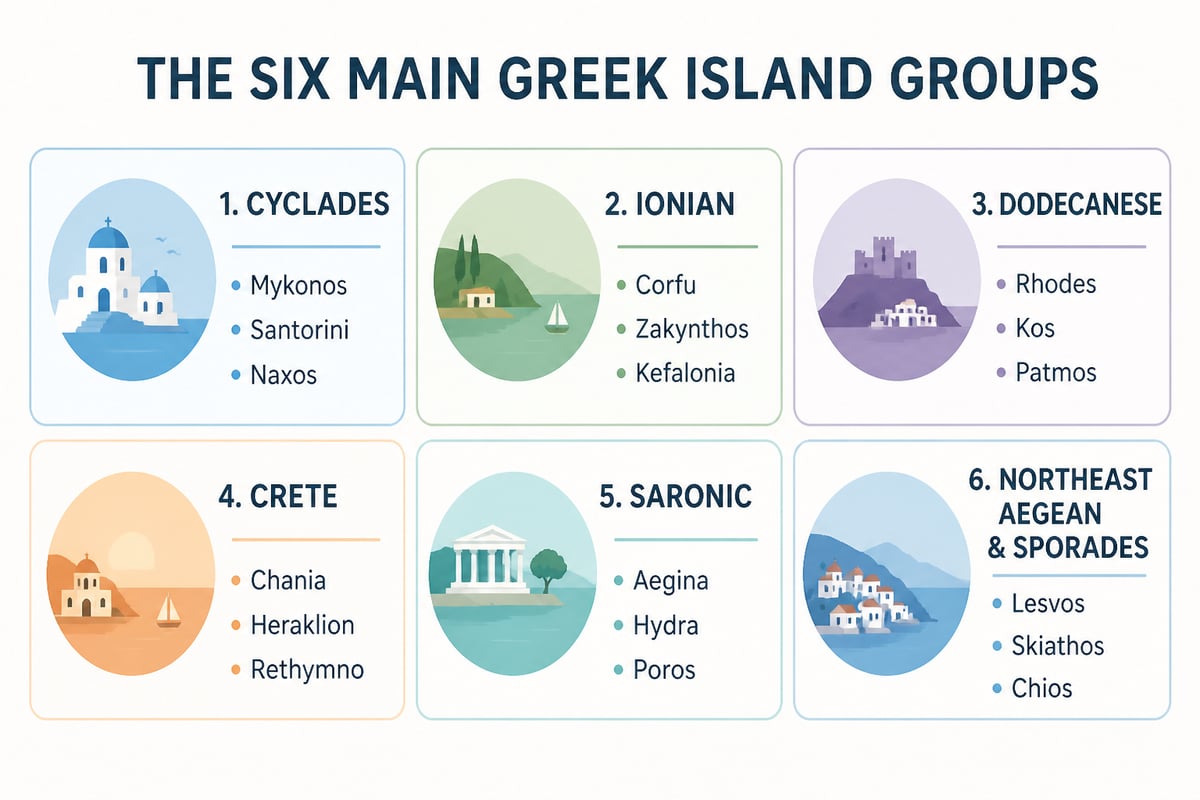
For planning purposes, the islands fall into six main groups:
- Cyclades: Santorini, Mykonos, Naxos, Paros, Milos, Sifnos and Ios, set in the central Aegean.
- Ionian islands: Corfu, Zakynthos, Kefalonia, Lefkada and Paxos, on the western coast.
- Dodecanese: Rhodes, Kos, Symi, Patmos and Karpathos, near the Turkish coast.
- Crete: the largest island, effectively a destination of its own.
- Saronic islands: Hydra, Aegina, Poros and Spetses, within reach of Athens.
- Northeast Aegean and Sporades: Lesvos, Samos, Skiathos and Skopelos.
Treat the group as your first filter. Ferries connect islands within a group far more easily than between groups, so a trip that stays in one cluster costs less time and money than one that jumps across the map.
What Are the Best Islands to Visit?
The best islands to visit depend on what you want from the trip, and a handful consistently deliver. Published guides point to the same names: a 2025 DK guide highlights Santorini, Mykonos and Crete with maps, walks and itineraries, while the 2025 Moon guide focuses on Athens and 15 Greek islands, including Karpathos, Corfu and Lefkada alongside the famous pair.
Here is how the leading islands compare by travel style:
| Island | Group | Best for | Pace |
|---|---|---|---|
| Santorini | Cyclades | Caldera views, honeymoons, wine | Busy in summer |
| Mykonos | Cyclades | Nightlife, beach clubs, dining | Lively |
| Naxos | Cyclades | Beaches, food, villages, families | Relaxed |
| Milos | Cyclades | Volcanic coastline, boat trips | Relaxed |
| Crete | Crete | History, hiking, cuisine | Varied |
| Corfu | Ionian | Old town, greenery, culture | Moderate |
| Rhodes | Dodecanese | Medieval city, beaches | Moderate |
| Symi | Dodecanese | Quiet harbor, neoclassical architecture | Quiet |
| Paros | Cyclades | Fishing villages, watersports | Moderate |
If you can visit only one island, Crete offers the widest range. If you want two contrasting stops, pairing a lively Cycladic island with a quieter one gives the best balance.
Which Greek Islands Should You Avoid on a First Trip?
On a first trip, avoid islands that are difficult to reach, very small, or built around a single type of experience that may not match yours. This is not a verdict on any island's quality. It is a question of fit and logistics.
Consider these cautions:
- Very remote islands such as Kastellorizo or Folegandros in shoulder season can involve long, weather-dependent ferry rides and limited services.
- Mykonos in July and August can feel crowded and expensive if you want a quiet stay, though it suits travelers who want nightlife and beach clubs.
- Package-heavy resort strips on islands like Kos or parts of Zakynthos may feel generic if your aim is village life and local food.
- Too many islands in too few days. Every ferry transfer costs half a day once you count the port, the crossing and the arrival.
No island is a mistake as such. A first-time visitor who prefers solitude will be disappointed in Mykonos at peak season, while a couple wanting nightlife will find Symi too quiet. Match the island to the trip you want, and the question of which to skip mostly answers itself.
The Cyclades: Whitewashed Villages and Volcanic Landscapes
The Cyclades are the classic postcard islands, defined by white cubic houses, blue-domed chapels and dry, wind-swept hills. They are also the most practical group for island hopping, with frequent ferries linking the main islands from Athens' ports.
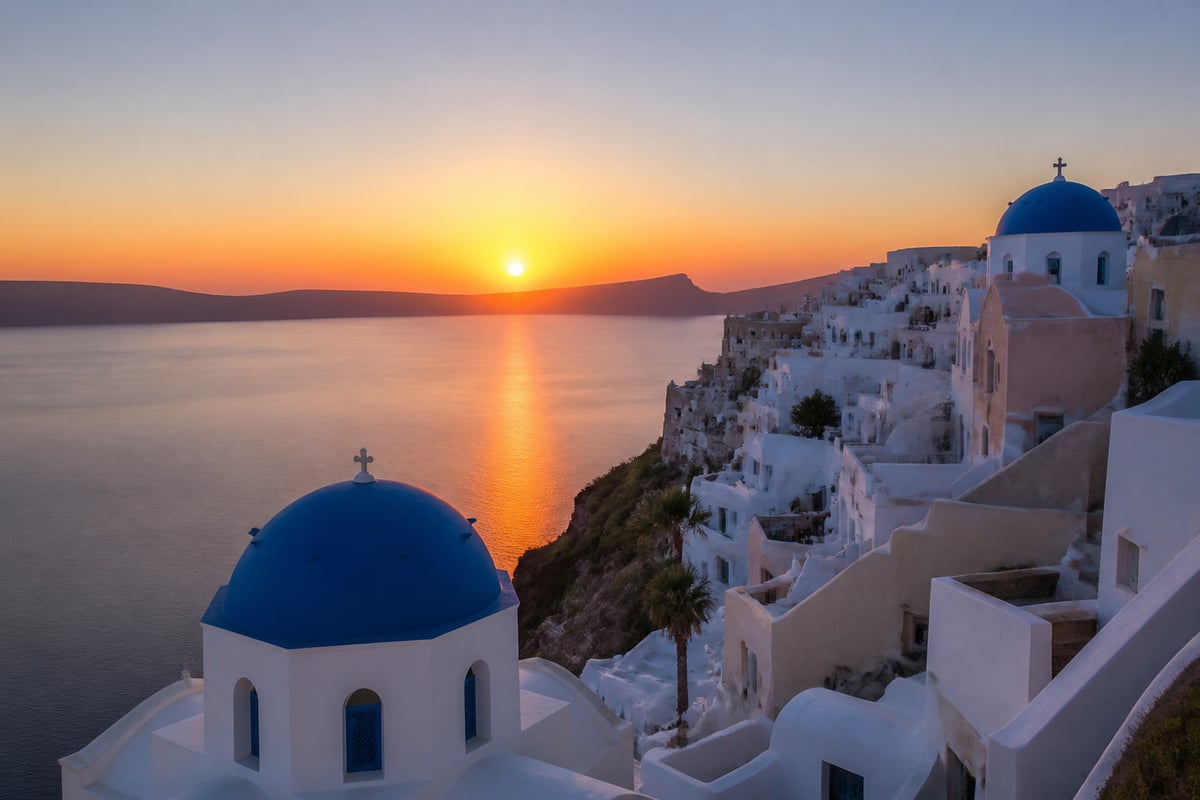
Santorini is the headline act. The caldera, a flooded volcanic crater, produces the sunsets and cliff-top views the island is known for. Plan on Oia for views, Fira for logistics, and a day at the Akrotiri archaeological site. The wineries on the island's south produce distinctive Assyrtiko, grown in volcanic soil.
Mykonos combines a handsome whitewashed town with some of the Aegean's best-known beach clubs and restaurants. Staying a few nights and visiting nearby Delos, a UNESCO-listed archaeological island, adds depth to the stay.
Naxos is the quiet favorite among travel planners. It has long sandy beaches, mountain villages, an impressive marble temple gate above the harbor and a strong farm-to-table food scene. It also works well for families.
Milos offers a different look: pale volcanic rock formations at Sarakiniko, sea caves and boat trips around the coast. It rewards travelers who like swimming and photography over nightlife.
Crete and the Ionian Islands: Space, History and Green Landscapes
Crete and the Ionian islands suit travelers who want more than beaches and sunsets. Both offer greener scenery and deeper layers of history than most of the Cyclades.
Crete is the largest Greek island and one of the most varied. The Minoan palace at Knossos dates to the Bronze Age, Chania and Rethymno have Venetian harbors, and the Samaria Gorge draws hikers from May to October. Cretan cuisine, built on olive oil, wild greens, cheese and local wine, is a reason to visit in its own right. Distances are large, so renting a car and basing yourself in two areas, such as Chania in the west and Heraklion or Agios Nikolaos in the east, makes sense.
Corfu has a UNESCO-listed old town shaped by Venetian, French and British rule, along with olive groves and cypress-covered hills. Kefalonia and Lefkada offer dramatic beaches such as Myrtos and Porto Katsiki, and Paxos is a small, quiet option for travelers who prefer boat days and tavernas on the water.
The Ionian islands generally have a longer green season than the Aegean, which means fewer dry, scorched landscapes in late summer. They also face the western sea, so the meltemi wind that affects Cycladic ferries in July and August is less of a factor.
The Dodecanese and Smaller Islands for Quieter Trips
The Dodecanese and several smaller islands give a calmer alternative to the headline destinations, usually with fewer crowds and more distinct local character.
- Rhodes: the medieval Old Town, a UNESCO World Heritage site, and the coastal village of Lindos make it a strong choice for history and beaches in one trip.
- Symi: a small harbor town of pastel neoclassical houses, popular as a day trip from Rhodes but far more atmospheric overnight.
- Patmos: a pilgrimage island with the Cave of the Apocalypse and a hilltop monastery, known for its spiritual, unhurried feel.
- Karpathos: mountain villages such as Olympos and wide, wind-friendly beaches, reached by air or ferry from Rhodes.
- Hydra: a car-free Saronic island, close enough to Athens for a weekend, where donkeys and boats do the work of vehicles.
These islands suit travelers on a second or third Greece trip, or those who prefer atmosphere to attractions. They also work as a quiet final stop after a busier itinerary.
When Is the Best Time to Visit the Greek Islands?
The best time to visit the Greek islands is late May to June and September to early October, when the sea is warm, ferries run fully and crowds are lighter than in midsummer. July and August are the hottest and busiest months, with the highest prices and the strongest meltemi winds in the Aegean.
A rough seasonal guide:
- April to mid-May: mild weather, wildflowers and open sights, but cooler sea temperatures and some seasonal businesses still closed.
- Late May to June: the strongest all-round window, with long days, warm swimming and a full ferry timetable.
- July and August: peak beach weather and peak crowds. Book accommodation and ferries well ahead.
- September to early October: the sea holds summer warmth, prices ease and the atmosphere settles. Many travelers consider this the best month.
- November to March: most island businesses close outside Crete, Rhodes and a few larger towns.
If you are planning a honeymoon or anniversary trip, September often offers the best combination of warm water, calm evenings and availability.
How to Plan an Island-Hopping Itinerary
A workable island-hopping itinerary limits the number of stops, keeps islands within one group and builds in buffer time for ferry delays. The common mistake is treating the map as a checklist.
Use these planning principles:
- Allow three nights minimum per island. Two nights leaves little time after transfers.
- Choose two or three islands for a ten to fourteen day trip. Santorini, Naxos and Paros, or Corfu and Paxos, are balanced pairings.
- Fly into Athens and consider flying out of a different gateway. Open-jaw tickets save backtracking.
- Check ferry operators by route. High-speed catamarans cut crossing times but are more affected by wind and cost more than conventional ferries.
- Book ferries early for July and August, and keep one flexible day before any international flight home.
- Decide on a car per island. Crete and Kefalonia need one, while Hydra, Symi and the main town areas of Santorini and Mykonos do not.
Seasonal flights between islands, such as Athens to Santorini or Mykonos, can replace long ferry rides, though they add a flight cost and baggage limits.
What Are the Biggest Islands in Greece?
The biggest islands in Greece by area are Crete, Evia, Lesvos, Rhodes, Chios, Kefalonia, Corfu, Lemnos, Samos and Naxos. Crete is far larger than any other island, while Evia sits close to the mainland and is connected by a bridge.
Size shapes the kind of trip you take. Larger islands such as Crete, Rhodes and Corfu have international airports, varied landscapes and enough sights for a week or more. Smaller islands tend to feel simpler and slower, with one main town, a handful of beaches and a short list of things to do. Naxos is the largest of the Cyclades and benefits from that scale, since it has mountains, farmland and long beaches without feeling crowded.
Practical Tips for Staying Well on the Islands
A few practical choices shape the quality of an island stay more than the island itself. The first is where you base yourself, since the main town of an island is not always the best place to sleep.
- Choose the right village. On Santorini, Imerovigli offers caldera views with less congestion than Oia. On Crete, small harbor towns such as Plakias or Elounda suit relaxed stays better than the largest resort areas.
- Pack for wind and uneven ground. Cobbled lanes and steep stairs are common, so comfortable footwear matters more than formal outfits.
- Carry some cash. Small tavernas, boat operators and rural shops may not accept cards.
- Plan one cultural stop per island. A monastery, a museum or an archaeological site gives context to the landscape and breaks up beach days.
- Eat where locals eat. Menus with seasonal fish, local cheeses and house wine usually beat those with photographs of dishes.
Travelers who plan dinners, boat days and transfers in advance also tend to use their limited days better. If you enjoy pairing travel with a lively evening scene, the same logic applies in other destinations, as in this guide to Reykjavik nightlife, where local recommendations beat generic listings.
FAQ
Is it better to visit one island or several?
For a week or less, one or two islands is usually better, because each ferry transfer consumes most of a day. For ten to fourteen days, two or three islands in the same group give variety without constant packing.
Are the Greek islands expensive?
Costs vary widely by island and season. Santorini and Mykonos are among the priciest in July and August, while Naxos, Paros and smaller Dodecanese islands tend to offer better value, and shoulder-season rates fall noticeably on all of them.
Can I visit the Greek islands without a car?
Yes, on many islands. Santorini, Mykonos, Hydra and Symi are workable with buses, taxis and boats, but Crete, Kefalonia and Corfu are much easier with a rental car or private driver.
Start by choosing your travel season and one island group, then shortlist two islands that match your pace. If you would rather have the transfers, hotels and local experiences arranged for you, Hellenic Holidays designs tailor-made Greece vacations and honeymoons around your dates, interests and budget. Share your plans with their team, and they will build an itinerary that fits the islands to the way you want to travel.