
Mycenae: Gateway to Bronze Age Greece’s Golden Era
Perched on a rocky hilltop in the northeastern Peloponnese, Mycenae stands as one of the most important archaeological sites in Greece and a testament to the sophistication of Bronze Age civilization. This legendary citadel, immortalized in Homer's epics as the kingdom of Agamemnon, offers modern travelers an unparalleled window into a world that flourished more than three millennia ago. From the massive Lion Gate to the royal shaft graves filled with golden treasures, Mycenae reveals the power, artistry, and architectural ingenuity of a civilization that dominated the Aegean world for centuries.
The Historical Significance of Mycenae
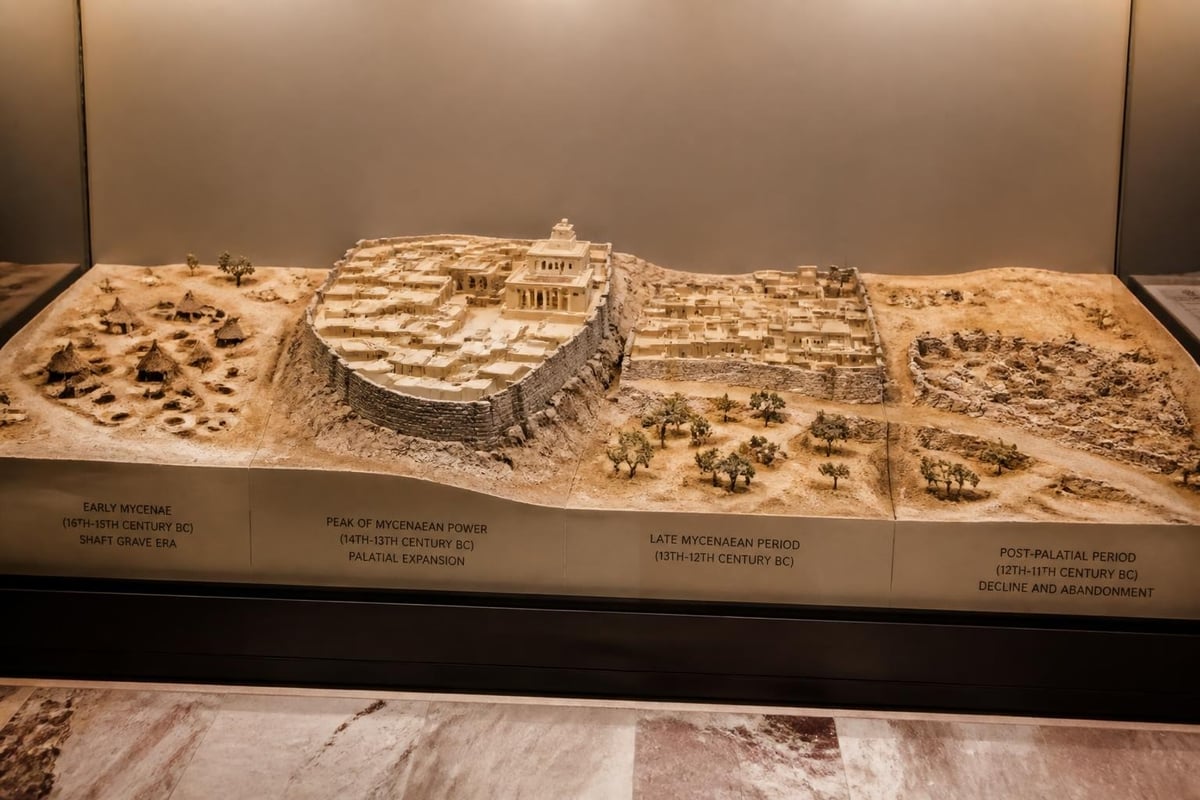
The archaeological site of Mycenae represents the heart of Mycenaean civilization, which reached its zenith between 1600 and 1100 BCE. This Bronze Age culture gave its name to an entire era of Greek prehistory, and its influence extended across mainland Greece, Crete, and the wider Mediterranean region.
Heinrich Schliemann's groundbreaking excavations in 1876 brought Mycenae back into the world's consciousness after millennia of obscurity. His discovery of Grave Circle A, containing burial shafts filled with golden masks, jewelry, weapons, and other precious artifacts, captured global imagination and proved that Homer's descriptions of "gold-rich Mycenae" were rooted in historical reality.
The Political and Economic Powerhouse
Mycenae functioned as a major administrative and economic center during the Late Bronze Age. The citadel controlled important trade routes connecting the Argolid plain with the Corinthian Gulf and beyond, positioning it strategically for commercial dominance.
Key aspects of Mycenaean power included:
- Control of agricultural production across the fertile Argolid region
- Sophisticated bureaucratic systems documented in Linear B script
- Extensive trading networks reaching Egypt, Anatolia, and the western Mediterranean
- Military prowess demonstrated through fortification architecture and weaponry
The palace complex at Mycenae coordinated redistributive economic activities, collecting taxes in the form of agricultural products and raw materials, then redistributing them according to palace priorities. Recent research utilizing machine learning approaches to restore Linear B tablets has enhanced our understanding of these administrative records, revealing intricate details about Mycenaean economic organization.
Architectural Marvels and Engineering Excellence
The construction techniques employed at Mycenae demonstrate remarkable engineering sophistication that continues to impress modern visitors and scholars alike. The fortification walls, built using what later Greeks called "Cyclopean masonry," utilized massive limestone blocks fitted together without mortar, creating structures that have endured for over three thousand years.
The Lion Gate and Citadel Entrance
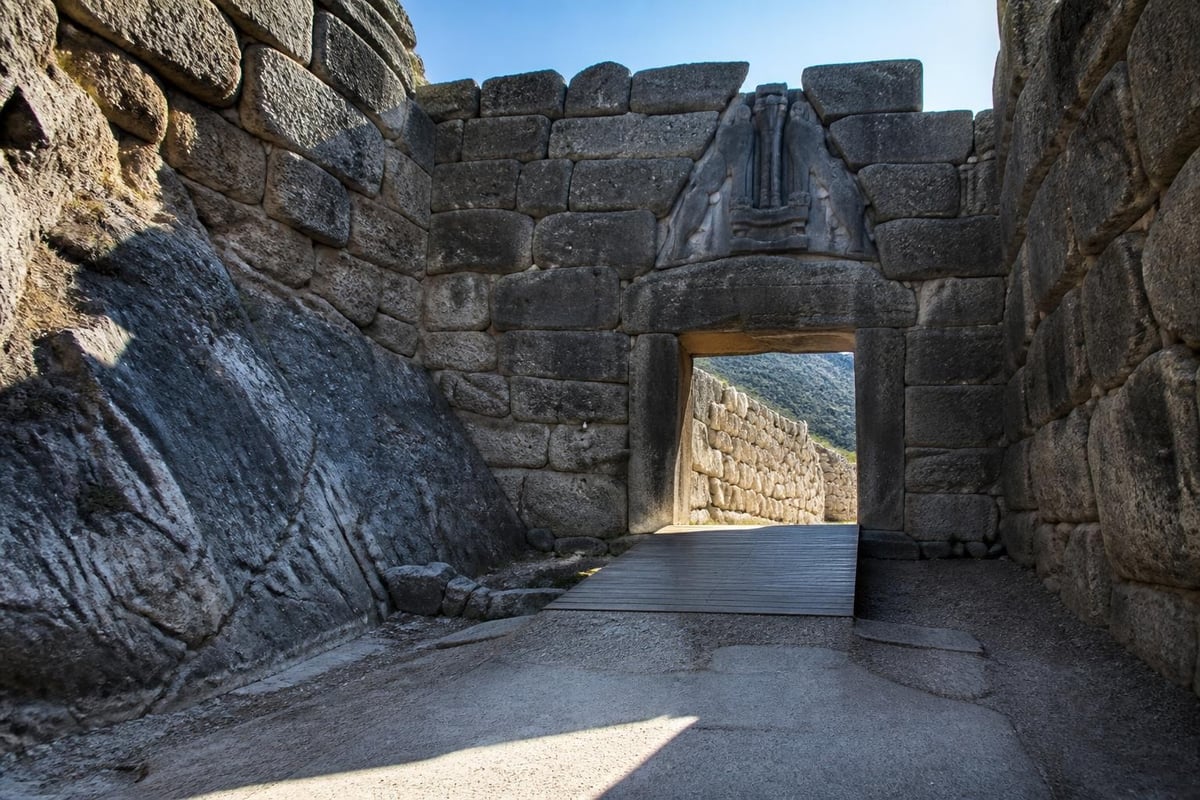
The Lion Gate serves as the monumental entrance to the upper citadel and remains one of the most recognizable symbols of Bronze Age Greece. Constructed around 1250 BCE, this architectural masterpiece features two lionesses carved in relief flanking a central column, representing the earliest known example of monumental sculpture in European art.
The gate's construction involved precisely cutting and positioning enormous limestone blocks, with the relieving triangle above the lintel reducing weight while providing space for the sculptural decoration. This engineering solution demonstrates sophisticated understanding of structural mechanics and aesthetic principles.
Grave Circle A and Royal Burials
Located just inside the Lion Gate, Grave Circle A contained six shaft graves that yielded some of the most spectacular archaeological finds ever discovered in Greece. The famous gold "Mask of Agamemnon" (though predating the legendary king by several centuries) exemplifies the extraordinary craftsmanship of Mycenaean goldsmiths.
| Burial Feature | Period | Notable Finds |
|---|---|---|
| Shaft Grave I | 16th century BCE | Gold cups, silver vessels |
| Shaft Grave III | 16th century BCE | Multiple gold masks, jewelry |
| Shaft Grave IV | 16th century BCE | Gold rhyton, weapons with gold overlay |
| Shaft Grave V | 16th century BCE | "Mask of Agamemnon," gold diadems |
Geological studies have revealed that Grave Circle A’s location may relate to natural fault features that held special significance for Bronze Age inhabitants, suggesting the Mycenaeans carefully chose burial locations based on landscape features they considered sacred.
The Treasury of Atreus and Tholos Tombs
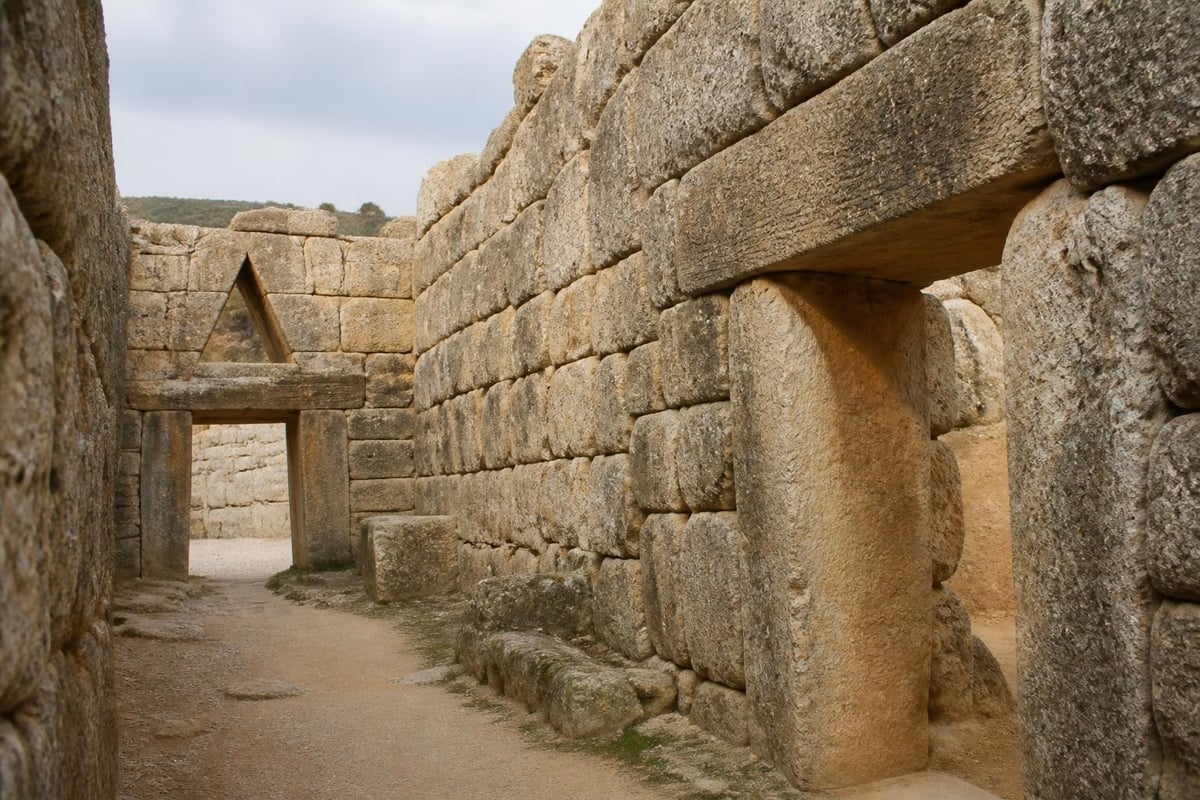
Beyond the citadel walls, the Treasury of Atreus (also called the Tomb of Agamemnon) represents the pinnacle of Mycenaean tomb architecture. This beehive-shaped tholos tomb, constructed around 1250 BCE, features a corbeled vault that rises to over 13 meters in height, creating an interior space that remained the largest dome in the ancient world for over a millennium.
The engineering precision required to construct this monument without collapse demonstrates advanced mathematical and architectural knowledge. The doorway, framed by massive lintel stones weighing over 100 tons, leads to a circular chamber where Mycenaean royalty were laid to rest with elaborate grave goods.
Construction Techniques
The tholos tomb construction process involved:
- Excavating a circular pit into the hillside
- Laying successive rings of precisely cut stone blocks
- Gradually corbeling each ring inward to create the dome
- Covering the structure with earth to create an artificial mound
- Constructing a monumental dromos (entrance passage) leading to the facade
Nine tholos tombs surround Mycenae, each demonstrating the architectural ambition and technical skill of Mycenaean builders. These structures served not only as burial places but as monuments to royal power and prestige, visible statements of dynastic authority that dominated the landscape.
Planning Your Visit to Mycenae in 2026
Modern travelers to Mycenae encounter a site that balances archaeological preservation with visitor accessibility. The location in the Argolid region places it within easy reach of other significant destinations, making it an essential component of any comprehensive exploration of ancient Greece.
Practical Visitor Information
The archaeological site typically opens at 8:00 AM daily, with extended hours during summer months. Spring (April through June) and autumn (September through October) offer optimal visiting conditions, with moderate temperatures and fewer crowds compared to peak summer season.
Essential items to bring:
- Comfortable walking shoes with good traction
- Sun protection (hat, sunscreen, sunglasses)
- Water bottle (limited shade on site)
- Camera for capturing architectural details and landscape views
The site requires moderate physical fitness, as exploring the citadel involves climbing uneven ancient pathways and stairs. Allow a minimum of two to three hours for a thorough visit, though archaeology enthusiasts may prefer spending half a day exploring the ruins and museum.
Combining Mycenae with Regional Attractions
The proximity of Mycenae to Nafplio, one of Greece's most beautiful historic towns, creates excellent opportunities for multi-day itineraries. The Archaeological Museum of Nafplion houses important Mycenaean artifacts from the region, including the famous Dendra Panoply, a complete suit of Bronze Age armor discovered nearby.
| Nearby Destination | Distance from Mycenae | Key Attractions |
|---|---|---|
| Nafplio | 24 km (15 miles) | Palamidi Fortress, Old Town, Archaeological Museum |
| Epidaurus | 30 km (19 miles) | Ancient Theatre, Sanctuary of Asclepius |
| Corinth | 48 km (30 miles) | Ancient Corinth, Acrocorinth, Archaeological Museum |
| Tiryns | 20 km (12 miles) | Cyclopean fortifications, Bronze Age palace |
The Mycenaean Cultural Legacy
The civilization centered at Mycenae left an enduring imprint on Greek culture that extended far beyond the Bronze Age collapse around 1100 BCE. The Linear B tablets discovered at Mycenaean sites provided crucial evidence that the Mycenaeans spoke an early form of Greek, establishing linguistic continuity between Bronze Age and Classical Greece.
Connections to Homeric Epic
Homer's Iliad and Odyssey, composed centuries after Mycenae's collapse, preserved memories of the Bronze Age world in poetic form. Archaeological discoveries have revealed surprising correlations between Homeric descriptions and Mycenaean material culture, from palace layouts to military equipment and religious practices.
The extensive excavation documentation preserved in British School at Athens digital collections provides researchers and interested travelers with access to historical photographs and field notes that trace the progressive revelation of Mycenaean civilization through systematic archaeology.
Understanding Mycenaean Society Through Artifacts
The artifacts recovered from Mycenae provide intimate glimpses into daily life, religious beliefs, artistic sensibilities, and social organization. The extraordinary concentration of gold objects in the shaft graves suggests highly stratified society with powerful elite classes controlling significant wealth.
Religious Practices and Beliefs
Mycenaean religion combined elements that would later appear in Classical Greek worship with distinctive Bronze Age characteristics. Archaeological evidence reveals worship of deities whose names appear in Linear B texts and later Greek mythology, including Poseidon, Zeus, Hera, and Dionysus.
Material evidence for Mycenaean religion includes:
- Figurines depicting goddesses or worshippers
- Ritual vessels for libations and offerings
- Shrine rooms within palace complexes
- Sacred symbols including double axes and horns of consecration
Recent scholarly research highlighted in Archaeological Reports continues to refine our understanding of excavation history and artifact contexts, acknowledging the contributions of early archaeologists whose careful work laid foundations for modern Mycenaean studies.
Mycenaean Art and Craftsmanship
The artistic achievements preserved at Mycenae demonstrate sophisticated aesthetic sensibilities and technical mastery across multiple media. Mycenaean craftspeople excelled in metalworking, gem engraving, pottery production, and fresco painting, creating objects that combined functional purposes with decorative beauty.
Goldworking Excellence
The gold artifacts from the shaft graves represent the pinnacle of Bronze Age metalworking. Techniques included repoussé (hammering from the reverse to create raised designs), granulation (attaching tiny gold spheres for decorative effect), and filigree (delicate wirework). The famous funeral masks were created by hammering gold sheets over wooden forms, then refining facial features through additional tooling.
The National Archaeological Museum collections in Athens display the finest Mycenaean treasures, including extensive holdings from Mycenae's royal graves. Visitors to Athens can study these masterpieces in climate-controlled galleries with detailed interpretive information before or after visiting the archaeological site itself.
Pottery and Trade Goods
Mycenaean pottery evolved distinctive shapes and decorative patterns that became recognizable across the Mediterranean. Stirrup jars, designed for transporting oil and wine, appear at archaeological sites from Sicily to Cyprus to Egypt, testifying to extensive Mycenaean trading networks. The standardized shapes and decoration suggest centralized production and quality control, possibly under palace supervision.
The Collapse and Enduring Mystery
Around 1200 BCE, Mycenaean civilization entered a period of crisis that culminated in the destruction of major palatial centers, including Mycenae itself. The causes of this Bronze Age collapse remain debated among scholars, with explanations ranging from internal conflicts and natural disasters to invasions by external groups and systemic economic failure.
The site of Mycenae shows evidence of destruction by fire, but whether this resulted from warfare, earthquake, or other causes remains uncertain. What is clear is that the palatial system collapsed, literacy disappeared with the abandonment of Linear B script, and population levels declined dramatically throughout Greece.
Post-Palatial Occupation
Despite the collapse of palatial civilization, Mycenae continued to be occupied through subsequent periods, though never regaining its Bronze Age prominence. Classical Greeks maintained awareness of the site's ancient importance, and the ruins continued to inspire awe and speculation about the heroic age described in epic poetry.
The site was eventually abandoned in the second century BCE, but its massive walls and monuments remained visible throughout antiquity and the medieval period, preserving the location's identity and attracting antiquarian interest long before systematic archaeology began.
Photography and Documentation Opportunities
For travelers interested in photography, Mycenae offers exceptional opportunities to capture ancient architecture within dramatic landscape settings. The positioning of monuments and the relationship between built structures and natural topography create compelling compositions at various times of day.
Optimal photography subjects include:
- Lion Gate with morning light illuminating the relief sculpture
- Panoramic views from the citadel across the Argolid plain
- Architectural details of Cyclopean masonry and construction techniques
- Interior of the Treasury of Atreus with natural lighting effects
- Landscape contexts showing Mycenae's strategic hilltop position
Understanding lighting conditions enhances photographic results. Morning light illuminates the Lion Gate facade beautifully, while late afternoon sun creates dramatic shadows that emphasize architectural relief and depth. The Treasury of Atreus presents unique challenges due to low interior light, but the play of sunlight through the doorway creates atmospheric effects worth capturing.
Educational Value and Academic Research
Mycenae continues to generate new scholarly insights as excavation techniques and analytical methods advance. Contemporary archaeology at the site employs technologies ranging from ground-penetrating radar to isotopic analysis of skeletal remains, revealing information about diet, health, trade connections, and population movements that earlier generations of archaeologists could not access.
The site serves as an important educational resource for understanding Bronze Age civilization, archaeological methodology, and heritage preservation. Academic programs regularly bring students to Mycenae for field study, combining examination of standing monuments with study of excavation history and artifact analysis.
For general visitors, Mycenae offers tangible connections to humanity's deep past, demonstrating how archaeological research transforms ruins into narratives about human achievement, innovation, and resilience. The site invites contemplation of fundamental questions about social organization, cultural development, and historical change that remain relevant in 2026.
Exploring Mycenae provides an unforgettable journey into Bronze Age Greece, where massive fortifications and golden treasures reveal the sophistication of Europe's first literate civilization. Whether you're captivated by Homer's epics, fascinated by archaeological discovery, or drawn to Greece's layered history, this UNESCO World Heritage site delivers profound insights into ancient Mediterranean culture. Hellenic Holidays specializes in crafting personalized itineraries that combine Mycenae with complementary destinations throughout the Peloponnese and beyond, ensuring your Greek adventure balances historical depth with comfortable travel logistics and authentic cultural experiences.