
Naxos Vacation: The Complete 2026 Guide
The largest island in the Cyclades archipelago, Naxos represents everything travelers seek in a Greek island escape without the overwhelming crowds found elsewhere. A Naxos vacation delivers pristine beaches stretching for miles, mountain villages where traditions remain unchanged for centuries, and archaeological treasures that span from Mycenaean times through the Byzantine era. Unlike its smaller neighbors, this island offers space to breathe, authentic experiences beyond tourist zones, and a landscape diverse enough to satisfy every type of traveler. Whether you're planning a romantic honeymoon, a family adventure, or a cultural exploration, Naxos provides the perfect canvas for a tailor-made Greek journey.
Why Choose Naxos for Your Greek Island Experience
The decision to plan a Naxos vacation stems from the island's unique position as both accessible and authentically Greek. While Santorini and Mykonos dominate Instagram feeds, Naxos quietly maintains its character as a working island where agriculture, marble production, and traditional crafts sustain local communities year-round.
What sets Naxos apart:
- Self-sufficient economy: Unlike purely tourist-driven islands, Naxos produces its own food, wine, cheese, and marble
- Year-round culture: Villages maintain active communities beyond summer months
- Accessibility: Multiple daily ferries and seasonal flights from Athens
- Value: Significantly lower prices than neighboring islands while maintaining high quality
- Diversity: Beach resorts, mountain villages, and historical sites all within short distances
The island stretches approximately 428 square kilometers, making it large enough to explore over multiple days yet compact enough that no destination requires more than an hour's drive from Naxos Town (Chora). This manageable scale allows visitors to base themselves in one location while easily accessing the island's full range of experiences.

Getting to Naxos and Moving Around
Planning your arrival represents the first crucial step in organizing your Naxos vacation. The island maintains excellent connections with mainland Greece and neighboring islands, giving travelers flexibility in routing their journey.
Transportation to Naxos includes several practical options. High-speed ferries from Piraeus port in Athens reach Naxos in approximately 3.5 hours, while conventional ferries take 5-6 hours but cost considerably less. Rafina port, located on Athens' eastern coast, offers an alternative departure point with slightly shorter crossing times. During peak summer months (June through September), Naxos Airport receives direct flights from Athens, select European cities, and occasional charter services.
Inter-island connections:
- Daily ferries to Santorini (1.5-2 hours)
- Multiple weekly services to Mykonos, Paros, and Ios
- Regular boats to smaller Cycladic islands
- Summer catamaran services offering faster transit times
Once on the island, rental cars provide the most freedom for exploration, though scooters work well for solo travelers or couples comfortable with two wheels. Public buses connect major villages and beaches from the main station in Naxos Town, operating reliable schedules throughout summer with reduced winter frequency.
Exploring Naxos Town and Coastal Areas
The island's capital and main port, Naxos Town blends Venetian castle districts, marble-paved alleys, waterfront promenades, and modern amenities into one compelling base for your Naxos vacation. The town divides into distinct quarters, each offering different atmospheres and experiences.
The Kastro District
Built by Venetian rulers in the 13th century, this fortified quarter sits atop the hill overlooking the harbor. Stone archways, hidden courtyards, and aristocratic mansions create an atmospheric maze where getting lost becomes part of the pleasure. The Archaeological Museum, housed in a former Jesuit school, displays finds spanning Naxos's 6,000-year history.
The Portara, Naxos's iconic marble doorway standing on the islet of Palatia, frames spectacular sunsets and serves as the island's most photographed landmark. This unfinished temple entrance to Apollo dates from 530 BCE and represents one of the Cyclades' most significant ancient monuments, described in detail by the Greek Ministry of Culture.
| Beach Name | Distance from Town | Best For | Facilities |
|---|---|---|---|
| Agios Georgios | Walking distance | Families, convenience | Full services, shallow water |
| Agios Prokopios | 5 km | Swimming, water sports | Tavernas, sunbeds, activities |
| Agia Anna | 6 km | Relaxed atmosphere | Restaurants, some sunbeds |
| Plaka | 8 km | Long walks, space | Limited, bringing supplies recommended |
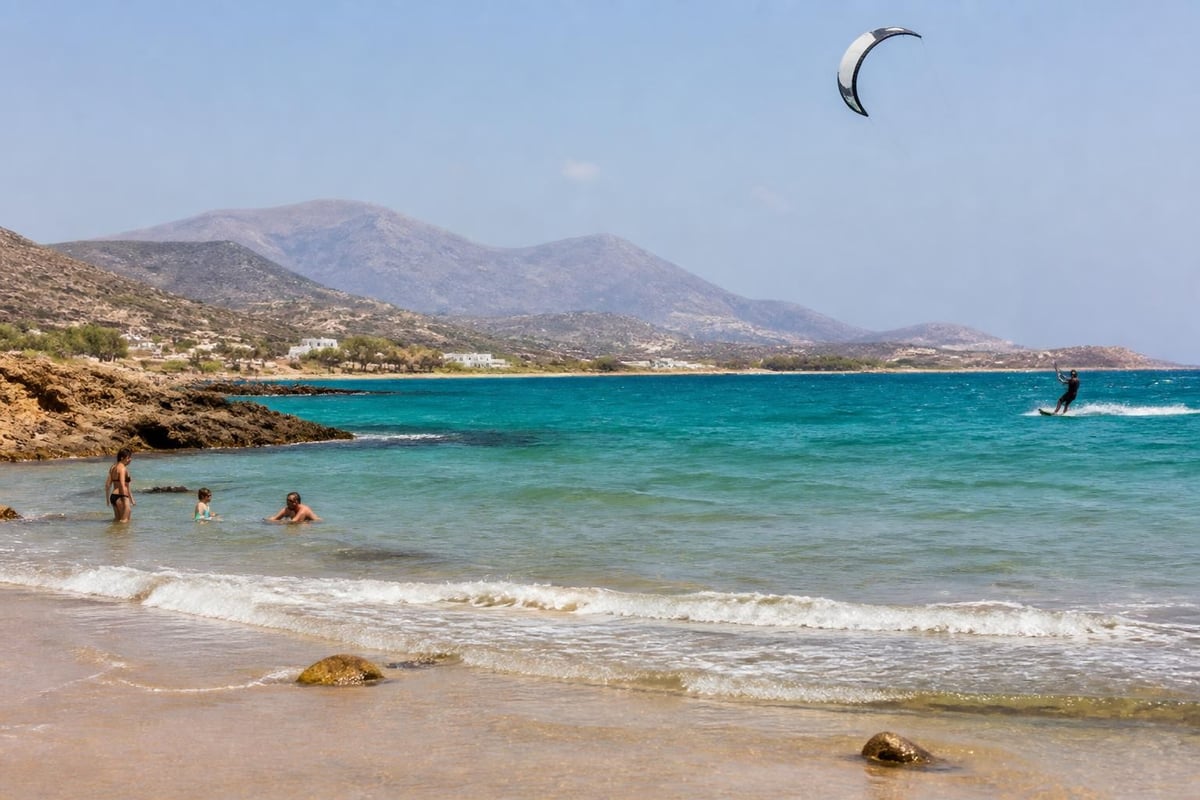
| Mikri Vigla | 17 km | Windsurfing, kitesurfing | Equipment rental, schools |
Beach Selection Strategy
Your Naxos vacation beach choices depend heavily on wind conditions, which shift throughout the day and season. The western coast beaches near town remain protected from the prevailing summer meltemi winds, making them ideal for families and those seeking calm water. The southern and southwestern coasts catch these winds, creating perfect conditions for wind sports but sometimes challenging swimming.
Exploring beyond the famous beaches reveals hidden coves and remote stretches where you'll share the sand with only a handful of visitors. Beaches like Pyrgaki, Alyko, and Kastraki on the southwestern coast offer cedar groves providing natural shade, crystal-clear water, and an away-from-it-all atmosphere that feels worlds removed from typical tourist beaches.
Mountain Villages and Interior Exploration
The mountainous interior transforms your Naxos vacation from a simple beach holiday into a genuine cultural immersion. Traditional villages perch on hillsides, surrounded by olive groves, citrus orchards, and marble quarries that have operated since ancient times. Each settlement maintains distinct character, architecture, and local traditions.
Halki: The Island's Historical Heart
Former capital of Naxos during the 18th and 19th centuries, Halki preserves elegant neoclassical mansions, Byzantine churches, and a central square shaded by massive plane trees. The Vallindras Distillery, operating since 1896, produces kitron-Naxos's signature citrus liqueur made from the leaves of the citron tree found only on this island.
Local workshops demonstrate traditional crafts including pottery, weaving, and icon painting. The village serves as an excellent base for hikers, with trails leading to ancient towers, abandoned monasteries, and mountain peaks offering panoramic views across the Cyclades.
Apiranthos: The Marble Village
Built entirely from local marble and slate, Apiranthos clings to the slopes of Mount Fanari at 650 meters elevation. The village maintains a fiercely independent character, preserving its own dialect influenced by ancient Cretan settlers who arrived in the 10th century.
Apiranthos highlights:
- Four small museums covering archaeology, geology, natural history, and folklore
- Narrow marble-paved lanes designed to channel cooling breezes
- Traditional kafeneions (coffee houses) where locals gather daily
- Access to hiking trails including routes to Zeus Cave and Mount Zas (1,004m)
The village comes alive during religious festivals and village celebrations (panigiria), where traditional music, dancing, and communal feasting continue until dawn. Timing your Naxos vacation to coincide with these events provides unforgettable insights into living traditions.
Filoti and the Agricultural Heartland
Positioned at the base of Mount Zas, Filoti represents Naxos's agricultural prosperity. Surrounded by olive groves, vineyards, and potato fields, this village maintains working relationships with the land that have defined life here for generations. The central plateia (square) buzzes with daily life as locals shop at grocers stocking island-produced goods rather than imported products.
The Church of Panagia Filotitissa stands as one of Naxos's finest religious buildings, while nearby hiking trails lead to the Aria Spring, ancient tower ruins, and eventually to the summit of Mount Zas itself. The climb takes approximately three hours and rewards hikers with views stretching across the entire Cyclades on clear days.
Naxian Cuisine and Gastronomic Experiences
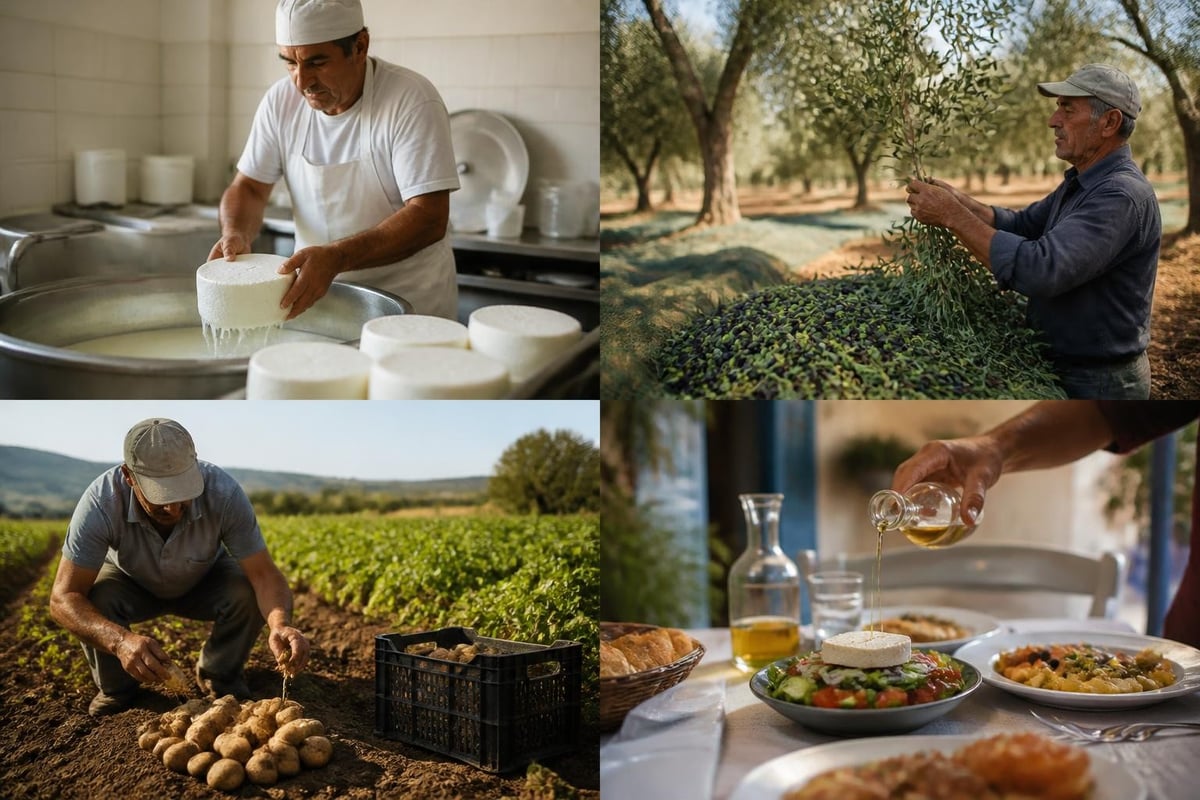
A proper Naxos vacation engages all senses, and taste ranks among the most memorable. The island's fertile valleys, mountain pastures, and surrounding seas produce ingredients that form the foundation of Naxos’s distinctive culinary landscape. Unlike islands dependent on imported food, Naxos feeds itself year-round, creating cuisine rooted in seasonality and tradition.
Signature Naxian products:
- Graviera cheese: A hard yellow cheese produced from cow's milk, aged in caves
- Arseniko cheese: Spicy, pungent cheese with protected designation of origin status
- Kitron liqueur: Citrus spirit in three varieties (dry, medium, sweet)
- Potatoes: Naxian potatoes command premium prices throughout Greece for their flavor and texture
- Honey: Mountain-sourced varieties including thyme and wildflower
Where and What to Eat
Traditional tavernas throughout the villages serve dishes rarely found on tourist-oriented islands. Rosto (slow-cooked pork), melachrino (rooster stewed with tomatoes and pasta), and kakavia (fisherman's soup) represent authentic Naxian cooking passed through generations. Coastal tavernas specialize in fresh seafood, often caught that morning by the owner's family boat.
Village bakeries produce distinctive breads, pastries, and sweets. Look for xerotigana (fried honey pastries), amigdalota (almond cookies), and fresh bread baked in wood-fired ovens. Many bakeries operate on traditional schedules, producing specific items on certain days of the week.
Farm visits and cooking classes add interactive elements to your Naxos vacation. Several producers welcome visitors to tour their operations, taste products, and learn traditional preparation methods. These experiences connect you directly with the families who maintain Naxos's agricultural heritage.
Historical Sites and Archaeological Treasures
The layers of history embedded in Naxos's landscape span from the Early Cycladic period (3200-2000 BCE) through Roman, Byzantine, Venetian, and Ottoman eras. Your Naxos vacation provides opportunities to explore remarkably preserved sites that receive a fraction of the visitors compared to mainland attractions.
Ancient Temples and Sanctuaries
Beyond the famous Portara, Naxos preserves numerous ancient religious sites. The Temple of Demeter near Sangri, dating from 530 BCE, underwent reconstruction in the 1990s and now stands as one of the best-preserved archaic temples in Greece. The sanctuary demonstrates the island's importance in ancient times and its wealth derived from marble quarrying.
The archaeological site at Grotta, just north of Naxos Town, reveals a Mycenaean settlement from 1300-1050 BCE. Underwater ruins visible in calm conditions extend the site into the harbor, showing how sea levels have changed over millennia.
Venetian Towers and Medieval Architecture
During the 13th-16th centuries, Venetian overlords constructed fortified towers throughout the countryside to control agricultural production and defend against pirates. These pyrgoi (towers) dot the landscape, particularly in the Tragea valley, where some have been restored and occasionally open for visits.
The most impressive include Bazeos Tower near Sangri, now functioning as a cultural center hosting summer exhibitions and concerts, and Belonia Tower in Galanado, which maintains much of its original defensive structure intact.
Planning Your Naxos Vacation Timeline
The duration and timing of your visit significantly impacts the experience. While a quick three-day stop covers highlights, a week or more allows deeper exploration and authentic connections with place and people.
Seasonal Considerations
| Season | Advantages | Considerations |
|---|---|---|
| May-June | Perfect weather, wildflowers, fewer crowds | Some beach facilities not yet open |
| July-August | Full services, festivals, guaranteed sunshine | Peak prices, strong winds some days |
| September-October | Warm sea, harvest season, cultural events | Decreasing ferry schedules late October |
| November-April | Village life, authentic atmosphere, low prices | Limited tourist infrastructure, weather unpredictable |
Planning a Naxos vacation during shoulder seasons (May, June, September, October) balances favorable weather with manageable crowds and reasonable pricing. Villages remain fully active, restaurants operate on extended schedules, and ferry connections maintain frequent service while beaches and archaeological sites offer space to appreciate them properly.
Sample Itineraries by Interest
Beach-focused (5 days):
- Agios Prokopios and Agia Anna exploration
- Southern beaches: Plaka, Mikri Vigla, Kastraki
- Southwestern remote beaches with packed lunch
- Water sports day (windsurfing or kitesurfing lessons)
- Relaxation day at preferred beach
Cultural immersion (7 days):
- Naxos Town and Portara exploration
- Halki village, Vallindras Distillery, local workshops
- Apiranthos village and mountain trails
- Filoti, Temple of Demeter, countryside
- Beach day at Plaka
- Cooking class and farm visit
- Archaeological Museum and village market shopping
Combination approach (6 days):
- Naxos Town orientation and nearby beach
- Mountain villages circuit
- Southern beaches exploration
- Temple of Demeter and traditional village lunch
- Hiking or water sports
- Relaxed beach day and sunset at Portara
Practical Tips for Maximizing Your Experience
Successfully navigating your Naxos vacation requires understanding local patterns, customs, and practical realities that differ from home or other tourist destinations.
Accommodation Strategy
Naxos Town provides the broadest range of services, nightlife, and dining options, making it convenient for visitors without rental vehicles. However, village accommodations offer quieter environments, often better value, and more authentic experiences. Beach resorts suit families prioritizing easy beach access and children's amenities.
Booking directly with smaller hotels and guesthouses often yields better rates than third-party platforms, plus establishes personal connections with owners who provide invaluable local recommendations tailored to your interests.
Transportation and Navigation
While public buses serve major destinations reliably, rental cars unlock the island's full potential. Roads range from excellent coastal highways to narrow village lanes requiring careful attention. Scooters and ATVs work well for experienced riders, though mountain roads demand respect regardless of vehicle type.
Download offline maps before arrival, as cellular coverage weakens in remote areas. Many beaches and archaeological sites lack clear signage, making GPS navigation essential for finding lesser-known locations.
Cultural Etiquette and Local Customs
Essential courtesies:
- Dress modestly when visiting churches and monasteries (covered shoulders and knees)
- Greet shopkeepers and taverna owners when entering and leaving
- Avoid beach visits during midday hours in August when winds peak
- Support local producers by shopping at village markets and buying island products
- Learn basic Greek phrases; efforts are universally appreciated even if execution falters
Understanding that villages follow traditional rhythms helps plan your days effectively. Shops close for afternoon rest (approximately 2-5 PM), then reopen until 8-9 PM. Restaurants serve lunch until mid-afternoon, close, then reopen for dinner starting around 7 PM with peak dining happening after 9 PM.
Beyond the Tourist Trail
The most memorable Naxos vacation moments often occur away from guidebook highlights. Exploring village life across the island reveals communities maintaining traditions while adapting to modern realities.
Lesser-Known Villages Worth Visiting
Galini, Melanes, Kinidaros, and Koronos each offer distinct characters shaped by geography, history, and local economy. Some specialize in emery mining, others in marble quarrying, while agricultural villages focus on specific crops suited to their microclimates.
Village festivals (panigiria) celebrating patron saints occur throughout summer, typically on the saint's feast day. These events welcome respectful visitors to join communal celebrations featuring live music, traditional dancing, and abundant food and wine. Ask locals about upcoming festivals or check community bulletin boards in village squares.
Hiking and Nature Experiences
Trail networks connect villages, archaeological sites, and natural features across the island. The Naxos Hiking Facebook group and local tourist information offices provide current trail conditions and recommendations.
Popular routes include the ancient marble quarries near Apollonas where unfinished kouros statues remain abandoned mid-carving, the Zeus Cave on Mount Zas's slopes, and coastal paths linking southern beaches through cedar forests and dunes.
Spring (April-May) brings wildflowers transforming hillsides into colorful displays, while autumn (October-November) offers comfortable temperatures for extended hikes without summer's heat.
Special Interest Activities and Experiences
Tailoring your Naxos vacation to specific interests creates depth beyond standard sightseeing. The island supports diverse activities suited to various passions and curiosities.
Water Sports and Active Pursuits
Mikri Vigla's dual beaches provide perfect conditions for both beginners and advanced practitioners of windsurfing and kitesurfing. Multiple schools offer lessons, equipment rental, and storage facilities. The south-facing beach suits learning, while the north side challenges experienced riders.
Scuba diving centers based in Naxos Town lead dives to underwater caves, ancient shipwrecks, and reef systems hosting Mediterranean marine life. Snorkeling requires only mask and fins at rocky coastline areas where fish congregate around submerged rocks and seagrass beds.
Art and Craft Workshops
Several villages maintain traditional craft workshops where visitors learn techniques passed through generations. Pottery studios in Halki offer wheel-throwing lessons, while weaving demonstrations show how traditional textiles take shape on century-old looms.
Icon painting workshops teach Byzantine techniques using natural pigments and gold leaf, creating personal artworks to take home. These intensive experiences typically require advance booking and full-day commitment.
Wine and Agricultural Tourism
Small-scale wineries throughout Naxos welcome visitors for tastings and tours. Varieties include indigenous grapes rarely found elsewhere, producing wines reflecting the island's terroir. Several producers combine tastings with light meals featuring estate-produced olive oil, vegetables, and cheese.
Olive harvest season (November-December) offers opportunities to participate in picking and pressing at farms accepting volunteer help in exchange for meals and olive oil. These working experiences provide authentic connections with agricultural realities shaping island life.
A Naxos vacation delivers authentic Greek island experiences combining natural beauty, rich history, and living culture in ways increasingly rare across the Cyclades. The island rewards visitors who venture beyond beaches to explore mountain villages, taste local products, and engage with communities maintaining traditions while welcoming thoughtful travelers. Whether you're drawn to ancient ruins, culinary discoveries, outdoor adventures, or simply peaceful days by turquoise water, Naxos provides the raw materials for unforgettable memories. Hellenic Holidays specializes in crafting tailor-made itineraries that reveal the full depth of Naxos and the broader Greek islands, designing personalized journeys that match your interests, pace, and travel style to create the Greek vacation you've imagined.